

The study is designed to assess the safety, tolerability, pharmacokinetics, and preliminary anti-tumor activity of NEO-811 in ccRCC.
The study is designed to assess the safety, tolerability, pharmacokinetics, and preliminary anti-tumor activity of NEO-811 in ccRCC.

The sildenafil oral film is expected to be commercially available in the US in March 2026.

URO-1’s FDA-cleared SUREcore and coreCARE prostate biopsy devices have been adopted at multiple Novant Health hospitals as part of a systemwide value analysis.



At 24 months, apalutamide demonstrated a statistically significant improvement in OS vs darolutamide without concurrent docetaxel.

The application is seeking approval of Signatera CDx as a companion diagnostic to select patients with MIBC for treatment with adjuvant atezolizumab.

A recap of the FDA submissions and regulatory decisions in urology from January 2025.

ANDROMEDA is looking to build on previous findings from the LUNAR trial in recurrent, oligometastatic prostate cancer.

Cooled laser focal therapy with the ProFocal Device showed promising cancer control in patients with localized prostate cancer.

The combination was tolerable and demonstrated promising early efficacy as a 3rd-line option for patients with mCRPC.

The report highlights key trends in cancer treatment and outcomes, including detailed analyses across 3 cancer types: prostate, esophageal, and melanoma.

AVA-291 is a differentiated formulation of testosterone designed to retain androgen activity while resisting aromatization.

The prospective registry is evaluating a personalized counseling and monitoring strategy for patients who are at an increased risk of prostate cancer due to positive family history or pathogenic genetic variants.

The results highlight the early clinical potential of the device for restoring erectile function post-prostatectomy.
The safety and efficacy of the Break Wave device was assessed in the pivotal SOUND trial.

The ARID platform is evaluating the safety and efficacy of the Voro Urologic Scaffold in minimizing stress urinary incontinence following robot-assisted radical prostatectomy.

The phase 3 BiPASS trial is assessing earlier use of 68Ga-PSMA-PET imaging in the pre-biopsy setting.

Enrollment in the ongoing pivotal QUILT-2.005 trial has now reached 85%.

The Safety Review Committee has recommended that the trial proceed with the cohort expansion phase with no modifications to the protocol.

The next step is to prospectively validate the model in real-world clinical settings or within ongoing clinical trials.
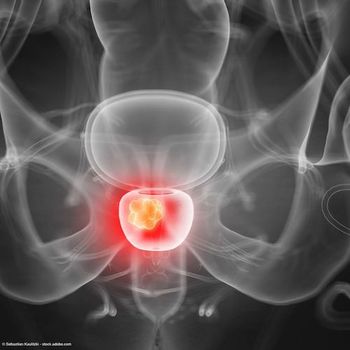
Image-guided radiotherapy with reduced target margins may improve some dosimetric parameters and patient-reported urinary symptoms.

The ARTISAN trial includes both 177Lu-PSMA naïve and 177Lu-PSMA experienced cohorts.

The phase 2 study is looking to evaluate nadofaragene firadenovec in combination with the investigational light-activated small molecule TLD-1433 (Ruvidar).

Treatment failure occurred in 46% of patients in the high-risk group vs 21% of patients in the low-risk group.

The study is intended to support potential label expansion of testosterone undecanoate in men aged 65 to 80 years with hypogonadism.
Enolen is currently under investigation in a phase 1 trial to assess its safety and efficacy in delivering enzalutamide locally into the prostate.

The phase 2 PROHEAR trial is assessing the safety and efficacy of ACOU085 in preventing ototoxic hearing loss induced by cisplatin-based chemotherapy.

The results from this study are expected to support an application to the FDA for premarket approval of the Butterfly device.

2025 featured multiple advancements in women's health aimed at enhancing treatment options and awareness.

Published: January 8th 2026 | Updated: January 9th 2026

Published: December 17th 2025 | Updated: December 19th 2025

Published: June 10th 2025 | Updated: June 12th 2025

Published: May 7th 2024 | Updated: May 21st 2024

Published: May 29th 2025 | Updated:
Published: April 18th 2025 | Updated: