
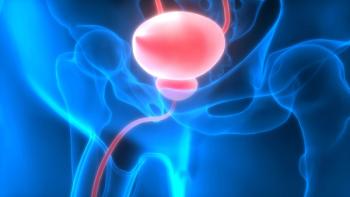
“Currently, there is no role for statins in management of LUTS,” says Jordan J. Kramer, MD.
“Currently, there is no role for statins in management of LUTS,” says Jordan J. Kramer, MD.

“Always look at the patient as…a whole and not only [their] testosterone levels,” says Karim Sultan Haider, MD.

"Certainly, the Optilume drug-coated balloon appears to be safe and effective in roughly two-thirds of patients at 3 years," said Justin Chee, MD.

“What's most important [is] that…one dose does not just fit all,” says Martin M. Miner, MD.

"The majority of patients who get onabotulinumtoxinA (Botox) don't need to use a catheter at all," says David A. Ginsberg, MD.

“There's been a lot of evidence over the past few years that there's certainly a…correlation between dietary intake and risk of prostate cancer, [but] there's really not a whole lot of data on risk of development of lethal prostate cancer,” says Nima Sharifi, MD.

“There are a number of significant advantages of this new technology, including the maintenance of antegrade ejaculation, the short operative time [and] the exceptional outcomes postoperatively for the patient,” says Naeem Bhojani, MD, FRCSC.
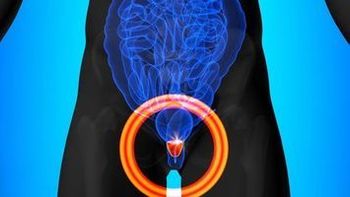
“The RTOG-0815 study [of dose-escalated RT plus androgen suppression] has provided...data to have an intelligent conversation with our patients and provide them numbers so that they know what to expect,” says Bridget F. Koontz, MD.

In a recent study, Michael A. Weber, MD, and co-authors assessed the blood pressure and heart rate profiles of the beta 3 adrenergic receptor agonist vibegron in treating patients with OAB.

"If you look at men who had sexual dysfunction at the beginning of the study, compared to men that had good sexual function at the beginning of a study, both groups of men have equal response to improvement in their lower urinary tract symptoms,” says Kevin T. McVary, MD, FACS.
“The take-home message is that testicular cancer should definitely not be a taboo subject,” says Shawn Dason, MD.

“The idea that Aquablation [treats] any size and any shape of prostate really does seem to hold true for these cohorts of patients,” says Dean Elterman, MD, MSc, FRCSC.

"We're moving from an era where it was all based on judgment, and experience, to an era where treatments will be based on firm evidence of the structural failures present in each patient," says John O. L. DeLancey, MD.
“We were surprised to see that the majority of subjects in these simulations had testosterone levels within eugonadal range for all 3 dose's studies,” says Jay Newmark, MD, MBA.

“I would encourage other people to think about their own routines in the operating room, in the clinic, going to conferences, hosting conferences, doing interviews, and where each one of us could even slightly cut back,” says Stacy Loeb, MD, PhD, MSc.

“What our studies were looking at was a novel device that could potentially help bridge the gap between [endoscopic treatment and urethroplasty] to achieve endoscopic treatment and achieve greater success,” says Justin Chee, MD.

“Doing this study allows us to say, 'With repeat treatments, we're not seeing a greater risk of retention, and we're not seeing a greater risk of UTI,'" says David A. Ginsberg, MD.

“I wouldn't be surprised if we have spotty distribution areas of concern for the next several years,” says Sam S. Chang MD, MBA, on the latest episode of the UT podcast Speaking of Urology.

“The goal of this study was to look at that original phase 3 trial data [from 2013] and see if we could identify how much change in curvature patients were achieving with each of those 2 injections,” says Matthew J. Ziegelmann, MD.

“Most importantly, for the safety [of the] study…it looks like the medication has no really concerning adverse effects,” says Ronald Swerdloff, MD.

“I think that a lot of the best practices that the surgeons had developed and honed were really excellent communication skills, and…building a trusting physician-patient relationship, where they truly provided an informed consent of all the risks, all the benefits, [and] all the alternatives,” says Una Lee, MD, FPMRS.
“Most importantly, the improvement that they were able to get during the first couple of years is sustained, whereas what we expect in untreated men [is that] their erectile function…keeps on deteriorating,” says Karim Sultan Haider, MD.
"There is no planet B and, collectively, small individual actions can make a big difference," says Stacy Loeb, MD, PhD, MSc.

“[Attendees] will be learning multiple aspects in terms of the genetic evaluation for men with prostate cancer,” says Veda N. Giri, MD.

Welcome to another installment of Uranimals, a video series featuring urologists and their pets, brought to you by urology times. From a snuggling cat companion to an Australian parakeet, we have some more great guests for you!
“I think the most exciting thing in the Sexual Medicine sphere is the stride for equity, diversity, and inclusion,” says Jesse N. Mills, MD.

Steven A. Kaplan, MD, gives an overview of benign prostatic hyperplasia research highlights from the 2021 American Urological Association Annual Meeting.

“This study suggests that the treatment of a patient's underlying hypogonadism or sexual dysfunction may be protective in the use of finasteride for alopecia or BPH,” says Kevin J. Campbell, MD, MS.
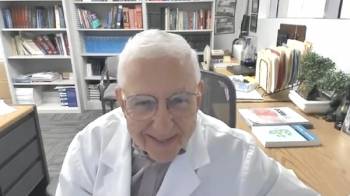
“The difference between this compound and other compounds that were orally administered, is that this seems to go through the lymphatic system rather than going directly to the liver,” says Ronald Swerdloff, MD.
“What we wanted to do was to substantiate any difference between BPH and alopecia with finasteride and also people who are concomitantly taking testosterone for hypogonadism,” says Kevin J. Campbell, MD, MS.