
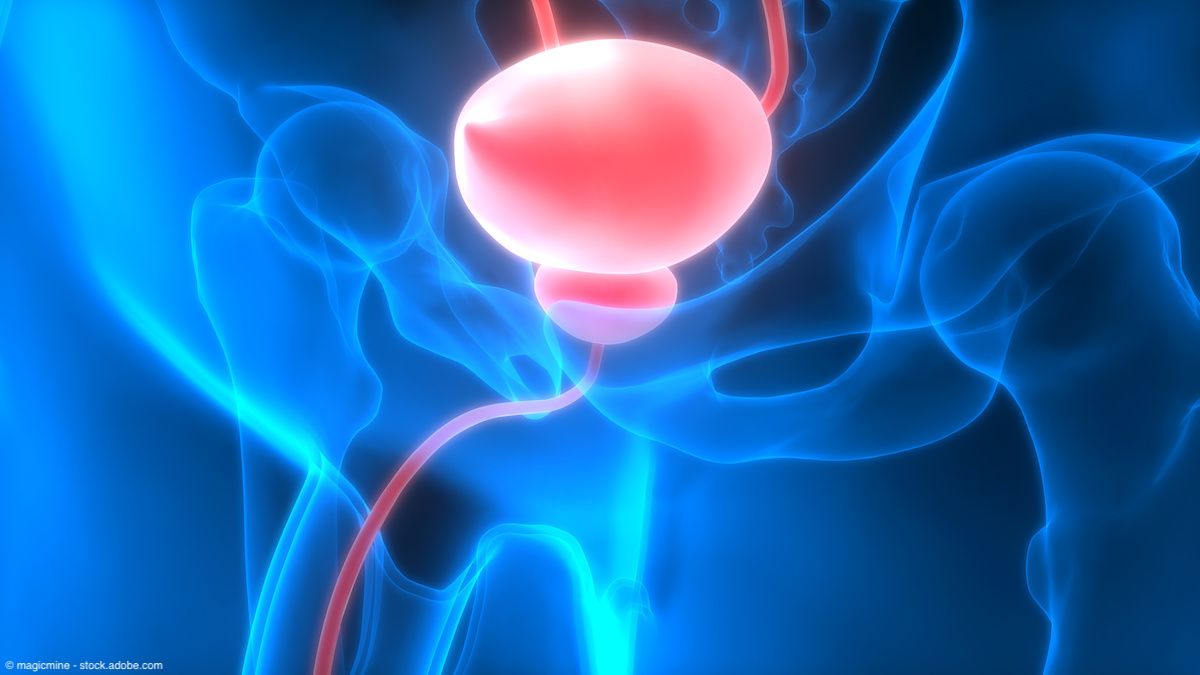




Bladder Cancer
Latest News
Advertisement
Latest Videos







CME Content

Advertisement
More News

“After doing a literature review about cystectomy patients and how devastating it is for female sexual function after having a cystectomy, [my main takeaway from this study is that] it seems that women tolerate the intravesical treatments well,” says Talia A. Helman, MD.

The cystoscopy solution was granted a CE mark for regulatory clearance in Europe in October 2023.

The decision to withdraw sacituzumab govitecan from the market was made in consultation with the US FDA following negative data from the phase 3 TROPiCS-04 trial.

"You've got a double pronged attack to kill cancer cells, which is in line with our concepts of immunologic care and immunologic treatment in a variety of cancers, especially cancers such as bladder cancer," says Gary D. Steinberg, MD.
Overall, 4 of 5 patients with low-grade disease who received bel-sar with light activation achieved a complete clinical response.

“Particularly [in] bladder cancer, there's 2 new drugs on the market that are exceptionally expensive, but they do provide benefit to patients,” says Geoffrey N. Sklar, MD, FACS.
The target action date for the application is June 13, 2025.

"On-going innovation will continue to drive UTUC management forward, and with it will come on-going challenges of how to best study a relatively rare disease," write the authors.
"The biomarker is better at predicting presence of disease than absence, and the reason that that's important is that's how we can think about the biomarker aiding in careful clinical assessment of patients," says Elizabeth R. Plimack, MD, MS, FASCO.

"Overall, TAR-200 is being tested with the aim of changing the therapeutic paradigm of patients with an early bladder cancer diagnosis, including non–muscle-invasive disease and muscle-invasive disease," says Andrea Necchi, MD.

Data from the phase 3 BART trial shows adjuvant radiotherapy is notably safe for patients with MIBC following radical cystectomy and chemotherapy.
In total, the phase 3 UTOPIA trial plans to enroll 87 patients with LG-IR-NMIBC to assess the safety and efficacy of UGN-103.
The phase 3 ENLIGHTED trial has reached the 50% patient enrollment threshold.
"This exciting and innovative technology has a wide range of possible applications, including tissue engineering, drug development, and precision medicine," write Kate Gessner, MD, PhD, and Philip Abbosh, MD, PhD.
The recommended phase 2 dose was determined to be rogaratinib at 600 mg in combination with atezolizumab at 1200 mg.
Enfortumab vedotin plus pembrolizumab was previously granted a priority review designation from the MHLW.

According to the authors, these findings from the VOLGA trial suggest that ctDNA may be a potential biomarker to predict therapeutic benefit in patients with MIBC.
At a median follow-up of 9 months, the confirmed objective response rate to disitamab vedotin plus pembrolizumab was 75% in the overall population.

“I think that these data in this approximately 700 patient trial consolidates and makes a strong case for the role of pembrolizumab in the adjuvant setting,” says Guru P. Sonpavde, MD.

"I think the fact that we're having these conversations, that they are being talked about at national meetings, and that we are bringing the patient voice into this is hugely important," says Mary W. Dunn, MSN, NP-C, OCN, RN.

“It's still relatively early, but this study in close to 1000 patients validated this algorithm, and it's now being studied prospectively as well,” says Yair Lotan, MD.

Panelists discuss their views on using cretostimogene as monotherapy versus combination therapy, the importance for urologists to stay updated on advances for managing BCG-unresponsive NMIBC, and the potential impact of combining cretostimogene with pembrolizumab on addressing unmet needs in NMIBC care.
Panelists discuss whether the trial results support investigating cretostimogene with other checkpoint inhibitors and provide insights into notable ongoing trials exploring cretostimogene for intermediate- or high-risk NMIBC, such as BOND-003 and PIVOT-006.

“Our study highlights critical gaps in health care equity when it comes to treatments that have been shown effective in prolonging survival,” says Solomon Woldu, MD.

“Even if they're postmenopausal, we remove the ovaries, which puts them at a higher risk for other complications such as osteopenia,” says Laura Bukavina, MD, MPH, MSc.
Advertisement
Advertisement
Trending on Urology Times
1
FDA approves sildenafil oral film for men with erectile dysfunction
2
The UroOnc Minute: Adjuvant Therapy in Renal Cell Carcinoma, with Brian Shuch, MD
3
Head-to-head analysis shows OS benefit with apalutamide vs darolutamide in mCSPC
4
Pearls & Perspectives: Modern Semen Testing and Male Fertility Care, with Thomas Masterson, MD
5