
Petros Grivas, MD, PhD, highlights notable trial readouts across NMIBC, MIBC, and urothelial carcinoma.
Petros Grivas, MD, PhD, highlights notable trial readouts across NMIBC, MIBC, and urothelial carcinoma.
Preliminary data from the study are promising.

The key finding was that men who received rectal spacers had a 50% lower risk of biochemical failure.
Pedro C. Barata, MD, MSc, FACP, outlines ARANOTE findings stratified by age subgroups.

Hear from 5 experts as they recap some of the top data from this year's ESMO Congress.
Louise K. Kostos, MBBS, FRACP, PhD candidate, outlines initial findings from the phase 1/2 AlphaBet trial.
Beckermann explained that adenosine blockade may be better shown in the durability of response, so data collection in the study remains ongoing.

The findings revealed that patients prioritized improvements in overall survival and reductions in cancer recurrence at 5 years over all other treatment factors


Regarding the timing of sperm retrieval, the findings suggest it is reasonable and safe to delay the procedure until adulthood.

Regarding feasibility, Helo highlighted that the asynchronous format is resource-efficient.

Scott Tagawa, MD, provides an overview of key findings from the PSMAddition study, evaluating 177Lu-PSMA-617 combined with ADT and ARPI in mHSPC.

Jeremie Calais, MD, PhD, shares key findings from the phase 2 LUNAR trial, assessing the safety and efficacy of adding 177Lu-PSMA therapy before SBRT in omHSPC.

Enrique Grande, MD, shares key findings from the DISCUS trial, exploring 3 vs 6 cycles of platinum-based chemotherapy for advanced urothelial carcinoma.

Stephen J. Freedland, MD, shares 'unprecedented' overall survival data from the phase 3 EMBARK trial.

Srikala Sridhar, MD, MSc, FRCPC, outlines phase 2 data on avelumab in patients with locally advanced or metastatic penile cancer.

The data continue to support adjuvant nivolumab as a standard of care for patients with high-risk muscle-invasive urothelial carcinoma.

Andrew W. Hahn, MD, details phase 2 efficacy findings on lenvatinib plus everolimus vs cabozantinib in patients with metastatic ccRCC.

Andrea Necchi, MD, shares key findings from the phase 2 GDFather-NEO trial, presented at ESMO 2025.

Amy E. Krambeck, MD, explained that active suction provided by FANS helps reduce intrarenal pressure by continuously removing irrigation fluid.

Sevann Helo, MD, recaps an SMSNA 2025 session on setting patient boundaries.

Muhammed A. Moukhtar Hammad, MBBCh, outlines key findings from a study evaluating testosterone replacement therapy and hearing-related outcomes.

Michael J. Morris, MD, discusses the mechanism of action for AB001, PSMA-targeted radioligand therapy for patients with mCRPC.

Landon Trost, MD, discusses patient-reported outcomes from a study comparing CCH treatment vs surgery for Peyronie's disease.

Aleece Fosnight, MSPAS, PA-C, highlights that although urinary leakage is common, it is not normal—and effective treatment options exist.
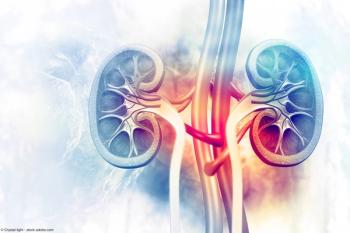
Krambeck highlights that FANS combine enhanced maneuverability and effective fragment evacuation, leading to higher stone clearance rates and improved procedural outcomes in endourology.
Ellen Cahill, MD, discusses a recent study on testosterone usage among men interested in fertility.
A. Lenore Ackerman, MD, PhD, discusses how clinicians should approach conversations with patients on the risks and benefits of vaginal estrogen.
Apolo highlighted the positive topline results from the phase 3 EV-303 trial (NCT03924895) evaluating EV plus pembrolizumab in cisplatin-ineligible patients with muscle-invasive bladder cancer.
Veda N. Giri, MD, outlines alternative care delivery models that could help improve access to genetic testing for prostate cancer.