


Kidney Stones
Latest News
Advertisement
Latest Videos



CME Content
Advertisement
More News
“I think the key to remember for a lot of what we're doing is that kidney stone disease is complicated. It's a really heterogenous patient population,” says Nicholas L. Kavoussi, MD.

Proper coding for percutaneous nephrolithotomy includes code 50081.

“There's going to be new techniques that we're not even aware of yet to try and break up the stones in a better fashion, but in a less invasive way for patients,” says Ben H. Chew, MD, MSc, FRCSC.

"We're currently doing a multicenter, prospective study using the new Boston Scientific scope to measure intrarenal pressure for every ureteroscopy that we perform to get more data and to be able to identify these patients earlier, before they get septic," says Naeem Bhojani, MD, FRCSC.

"What we found was that if during ureteroscopy your intrarenal pressure remains below 30 mm of mercury, there shouldn't be any infectious complications," says Naeem Bhojani, MD, FRCSC.
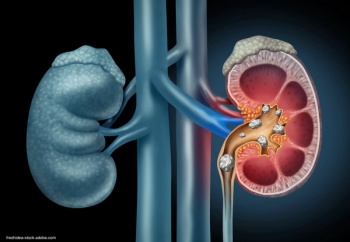
A multidisciplinary team at the Vanderbilt Institute for Surgery and Engineering is collaborating on a 3D navigational system to help limit kidney stone fragments that remain after surgery.
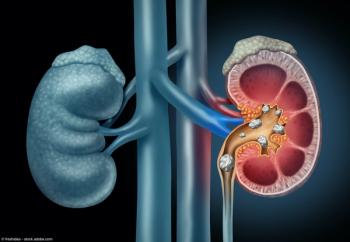
"[Our study] suggests that limiting added sugar intake may help to prevent the formation of kidney stones,” says Shan Yin, MD.

In total, 73% of patients showed an increase in 24-hour urine volume from baseline to the end of the 1-month trial period.
"As a result of this work, we came to the conclusion that maybe if you are going to stent someone, you should try and keep the stent time at a minimum of 4 or 5 days," says Khurshid R. Ghani, MD.
"Prescription alkali therapy is very costly; it has a lot of side effects, and the compliance is very low," says Brett Johnson, MD.

"CPT codes 50080 and 50081 describe the antegrade approach to stone removal requiring lithotripsy through a nephrostomy tract, with 50080 being reported for stones less than 2 cm in size in a single location, whereas 50081 would be reported for large or complex stones, stones in multiple locations, or stones in the ureter (such as in the example provided)," write Jonathan Rubenstein, MD, and Mark Painter.
"The main advantage of the Lithovue Elite is that it allows for intrarenal and intraureteral pressure monitoring," says Ravi Munver, MD.
The data were presented at the 2023 American Urological Association Annual Meeting in Chicago, Illinois.
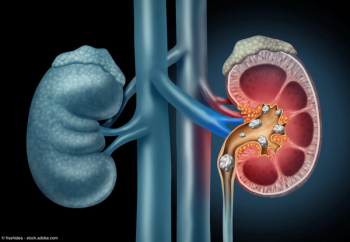
The trial assessed outcomes in patients who had kidney stones between 1 to 2 cm.

“Our data indicate that usage of a PCNL equipment whiteboard led to significant improvements in team perception of inter-disciplinary communication and case item selection accuracy," says Jenny N. Guo, MD.

"We unfortunately did not find any difference in pain scores [after ureteroscopy] at day 1, 2, or 3. We also didn't find any difference in use of rescue medication and rescue narcotic medication," says Karen L. Stern, MD.

"While CBD oil appears safe, it does not seem to reduce pain or discomfort during the typically brief recovery period after this common procedure,” says Karen Stern, MD.
The highest cumulative 120-day rates of ED visits and HA were observed in patients who underwent percutaneous nephrolithotomy procedures.

“There are some situations where I do place stents, but I am really trying to limit [my] amount of stent usage,” says Christopher Allam, MD.
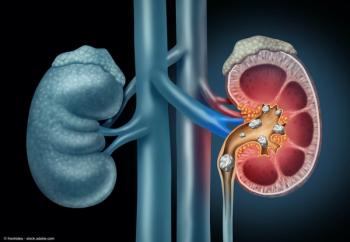
“Based off the questionnaire, [there was] statistically significant worsening quality of life, increased pain, and [increased] pain medicine requirement with a stent compared to without a stent,” says Christopher Allam, MD.

"This scope allowed me to maintain the intrarenal pressures lower than I would originally have done," says Naeem Bhojani, MD, FRCSC.
"The biggest take-home message for any urologist who's treating kidney stones is to understand that what we consider to be success may not be what our patients consider to be success," says John Michael DiBianco, MD.
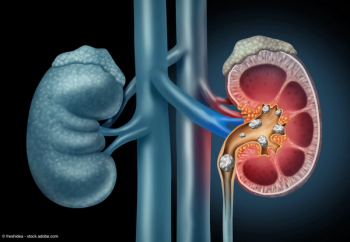
We have a dedicated full-time team. We have three fellowship-trained urologic specialists in stone disease. We will offer every treatment for stone disease, including endoscopic surgery, percutaneous surgery, robotic surgery and shockwave therapy,” said urologist Stephen Savage, MD, who leads the center.

"This has the opportunity to really revolutionize the way we treat kidney stone disease via ureteroscopy," says Naeem Bhojani, MD.

The patient was treated as part of a clinical study of the novel MONARCH platform at UCI Health in California.
Advertisement
Advertisement
Trending on Urology Times
1
FDA approves sildenafil oral film for men with erectile dysfunction
2
The UroOnc Minute: Adjuvant Therapy in Renal Cell Carcinoma, with Brian Shuch, MD
3
Integration of doublet and triplet therapy in metastatic prostate cancer
4
URO-1 prostate biopsy devices adopted across Novant Health System as clinical study continues
5