





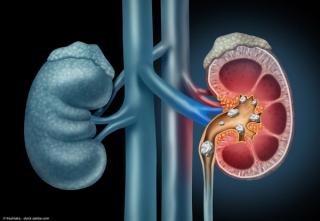
Kidney Stones
Latest News
Advertisement
Latest Videos






CME Content

Advertisement
More News

The machine learning algorithm incorporates readily available clinical information.

Study results show wide variation in stent placement following ureteroscopy.

Study results show a significant reduction in 24-hour urine oxalate in treated patients.

U.S. academic centers using the Soltive SuperPulsed Laser System to treat stones are finding it offers several advantages compared with holmium:YAG laser lithotripsy. But more research comparing the two is needed, according to a presentation at the 2019 World Congress of Endourology in Abu Dhabi, United Arab Emirates.

Findings from a longitudinal cohort study provide an evidence base for counseling patients about pain and recovery following ureteroscopy for nephrolithiasis.

Providers should incorporate discussion of dietary supplements into patient counseling, Kevin Koo, MD, MPH, MPhil, advises.
Single-access percutaneous nephrolithotomy can clear the vast majority of staghorn stones with minimal morbidity, said Tim Large, MD, at the 2019 World Congress of Endourology and SWL in Abu Dhabi.
Pharmacotherapy for reducing risk of stone recurrence is best reserved for patients with more aggressive disease who are at higher risk for another stone-related event, said Brett A. Johnson, MD, at the 2019 World Congress of Endourology and SWL in Abu Dhabi.

"First... you have to determine if you are in a global period," write Jonathan Rubenstein, MD, and Mark Painter.
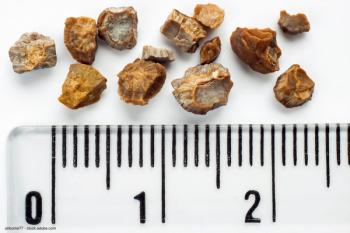
Overcoming challenges of medical therapy starts with leveraging guidelines.
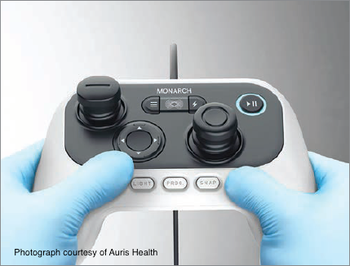
Advances in robotic URS will help target stones and reduce ionizing radiation.

Researchers in Tennessee are finding success with the use of an Enhanced Recovery After Surgery pathway that provides standardization for the anesthetic care and postoperative management of patients undergoing ureteroscopy and stent placement with a novel approach that minimizes opioid exposure.
Documentation must support performance of ‘unusual services,’ according to Ray Painter, MD, and Mark Painter.

A study presented at the AUA annual meeting in Chicago shows higher rates of emergency department (ED) visits when ureteral access sheaths are used during ureteroscopy to remove kidney stones.

Forgotten stents are one of the most common challenges urologists and their patients face, and they can cause significant complications and increase costs of care. Now, a program that tracks stent insertion and removal in the electronic medical record shows strong potential to help eliminate retained stents.
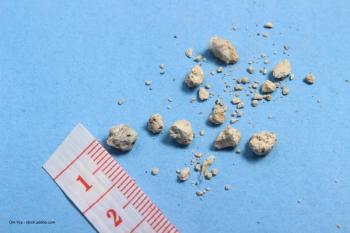
High rates of residual fragments after ureteroscopy point to the need to both improve selection of patients for this procedure and find ways to boost stone-free rates, according to researchers at UT Southwestern Medical Center, Dallas.

In this interview, Juan Calle, MD, discusses how he follows patients once they are stone free and how he utilizes dietary/lifestyle modification and medical management.
In this video, Juan Calle, MD, of Cleveland Clinic, explains what he would tell a young urologist who wants to become an expert in stone prevention and minimizing recurrence.

In this video, Bodo Knudsen, MD, of The Ohio State University Wexner Medical Center, Columbus, explains his step-by-step process for obtaining percutaneous access in stone patients.

In this interview, Bodo Knudsen, MD, outlines his step-by-process for obtaining percutaneous access, discusses the ways he reduces radiation exposure during percutaneous nephrolithotomy, and gives his thoughts on how clinicians can gain proficiency with access.
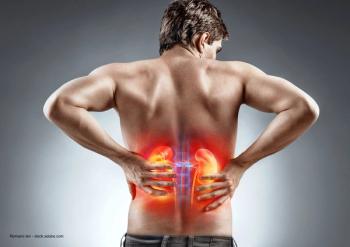
The high-power holmium laser with Moses technology (Lumenis Moses Pulse 120H) and the super-pulse thulium fiber laser (SPTF) have a similar ablative effect when operated at the same power, but when evaluated at maximal dusting settings, the SPTF laser seems to hold an advantage for greater efficiency, according to research reported at the AUA annual meeting in Chicago.

Patients with ureteral stents are rarely lost to follow-up, but the risk is increased when patients are stented in an emergent setting rather than as part of an elective procedure, Yale University urologists reported at the 2018 World Congress of Endourology in Paris.
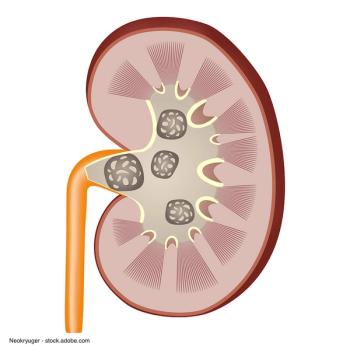
The Painters also answer coding questions regarding prostate needle biopsy and InterStim.

Dr. Dangle shows that pediatric ureteroscopy is safe and feasible with good results and without long-term sequelae on the ureters.

This video shows a case of semi-rigid ureteroscopy with laser lithotripsy for ureteral stone in a child, who is rendered stone free without pre-stenting.
Advertisement
Advertisement
Trending on Urology Times
1
FDA approves sildenafil oral film for men with erectile dysfunction
2
Integration of doublet and triplet therapy in metastatic prostate cancer
3
The UroOnc Minute: Adjuvant Therapy in Renal Cell Carcinoma, with Brian Shuch, MD
4
URO-1 prostate biopsy devices adopted across Novant Health System as clinical study continues
5