

Conference Coverage
about 16 hours ago
CA017-078 analysis finds no EFS difference with nivolumab in MIBCLatest News

Oct 26, 2026 | Opinion
Andrea Necchi, MD, on evolving perioperative treatment approaches for MIBC

Talazoparib/enzalutamide approved for HRR-mutated mAPMN/S prostate cancer
Oct 26, 2026

CA017-078 analysis finds no EFS difference with nivolumab in MIBC
Oct 26, 2026

Daniel Heng, MD, highlights final LITESPARK-011 results in advanced ccRCC
Oct 26, 2026
Perioperative pembrolizumab added to MDT improves RFS in oligometastatic RCC
Oct 26, 2026






Advertisement
Shorts

0:26
Dr. Lowentritt's LUGPA 2027 pick: Friday afternoon breakouts
10 hours ago
by
Benjamin H. Lowentritt, MD, FACS

0:30
Correcting misconceptions about hormone therapy for GSM
4 days ago
by
Engy Habashy, MD

1:29
How gravity instillation may improve gem/doce feasibility
6 days ago
by
Adam B. Weiner, MD(+1 more)
0:50
Expert: Anktiva approval sets precedent for papillary-only NMIBC
6 days ago
by
JJ Zhang, MD
0:22
Why underactive bladder stays under the radar
8 days ago
by
Ariana L. Smith, MD

0:42
The hidden long-term cost of OAB step therapy
11 days ago
by
Anjali Kapur, MD
0:35
PCARE and PROs: Addressing penile cancer's hidden burden
12 days ago
by
Luis G. Medina, MD
0:18
Exploring intranasal PDE5 inhibitor delivery for erectile dysfunction
13 days ago
by
Melissa Hadley Barrett
0:40
Challenging misconceptions about proximal shunting
14 days ago
by
Juan J. Andino, MD, MBA

1:12
Belzutifan plus lenvatinib offers a new option after IO in ccRCC
18 days ago
by
Mina M. Fam, MD
From GSM guidance to HRT reform: A landmark year for women’s health
2025 featured multiple advancements in women's health aimed at enhancing treatment options and awareness.

Inguinal lymph node dissection in penile cancer
"Deep ILND is indicated for clinically positive lymph nodes and/or positive lymph nodes on frozen pathological analysis of the superficial nodal packet," write Bahrom J. Ostad, MD, and Stephen H. Culp, MD, PhD, FACS.

Inside HoLEP: Irina Jaeger, MD, discusses patient selection and technique
Jaeger emphasizes that the ideal HoLEP candidate is any patient with bothersome lower urinary tract symptoms due to BPH, including those with urinary retention or intolerance to medication.














Videos







Urology Times Digital Edition

"Deep ILND is indicated for clinically positive lymph nodes and/or positive lymph nodes on frozen pathological analysis of the superficial nodal packet," write Bahrom J. Ostad, MD, and Stephen H. Culp, MD, PhD, FACS.

"The overall 0% impact to urology does not help urology practices deal with increasing costs incurred for staff, rent, supplies, and other overhead," write Jonathan Rubenstein, MD, and Mark Painter.

"If 2025 showed us anything, it is the power of combining scientific progress with public engagement," writes Michael S. Cookson, MD, MMHC, FACS.

"Once money is in a Roth IRA, the withdrawal rules depend on whether the funds are contributions, conversions, or earnings," writes Julie Khazan, CFP.

The approval is supported by results from the phase 3 KEYNOTE-905/EV-303 trial.

The ExactVu micro-ultrasound platform demonstrated noninferior detection of clinically significant prostate cancer vs MRI.

"The OBBA includes broad and sweeping changes that will have a profound impact," writes Allan Shen, CFP.

The ENDURE 1 study plans to enroll up to 60 patients with benign ureteric strictures.
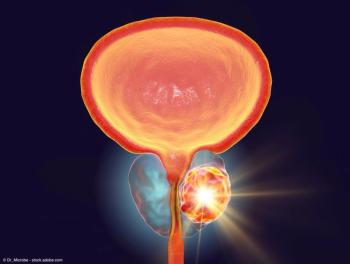
The phase 3 PSMAddition trial assessed the combination of 177Lu-PSMA-617 plus ADT/ARPI in an earlier stage of metastatic prostate cancer.

Jaeger emphasized that the ideal HoLEP candidate is any patient with bothersome lower urinary tract symptoms due to BPH, including those with urinary retention or intolerance to medication
Continuing Medical Education


Advertisement
All News
Advertisement

Interim phase 3 data show a 58% reduction in the risk of metastasis or death with the addition of darolutamide to ADT + radiation.

Carlos A. Vargas, MD, discusses updated survival outcomes, safety, and the mechanism of SYNC-T SV-102, an investigational in situ immunotherapy for metastatic prostate cancer.

Perioperative durvalumab (Imfinzi) plus neoadjuvant enfortumab vedotin-ejfv (Padcev) cut the risk of EFS events by 49% and death by 42% in cisplatin-ineligible MIBC.

The PROTEUS substudy addresses a key limitation of the main study, which had no surgery-alone control arm.

At a median follow-up of 60.9 months, median EFS was 74.1 months in the pembrolizumab arm and not reached in the placebo arm.
The phase 1/2 CELC-G-201 study found preliminary antitumor activity and manageable toxicity with gedatolisib plus darolutamide in metastatic castration-resistant prostate cancer.

Kim Chi, MD, FRCPC, discusses the rationale and design of the phase 3 KLK2-comPAS trial evaluating pasritamig alone and in combination with JNJ-9401 in patients with mCRPC.

Longer-term findings from the phase 2 ARACOG study suggest differences in objectively measured cognitive function between ARPIs.

Engy Habashy, MD, discusses key takeaways from the 2025 AUA GSM guideline, including the role of androgens and hormonal therapies in managing genitourinary syndrome of menopause.

Chad R. Ritch, MD, MBA, FACS, discusses how PSMA-PET informs staging, treatment planning, recurrence workup, and the interpretation of equivocal findings.
Advertisement

Michael S. Cookson, MD, MMHC, FACS, discusses how Anktiva’s expanded FDA approval may broaden bladder-preserving treatment options for BCG-unresponsive papillary-only NMIBC.

Jeffrey M. Spier, MD, discusses how fatigue may impact patient quality-of-life and when dose reduction may be an appropriate treatment strategy.

This approval expands the perioperative use of pembrolizumab plus enfortumab vedotin to all patients with MIBC, regardless of cisplatin eligibility.
Take a look through some of the notable data presentations at this year's ESMO Congress.
The investigational HIF-2α inhibitor casdatifan demonstrated antitumor activity as monotherapy and in combination regimens across the ARC-20 platform study.
Advertisement
Advertisement
Trending on Urology Times
1
Adding darolutamide to ADT and radiation improves MFS in very high-risk localized prostate cancer
2
PROTEUS Substudy: Perioperative apalutamide plus ADT improves EFS vs surgery alone
3
Talazoparib/enzalutamide approved for HRR-mutated mAPMN/S prostate cancer
4
In situ immunotherapy shows encouraging survival findings in prostate cancer
5