



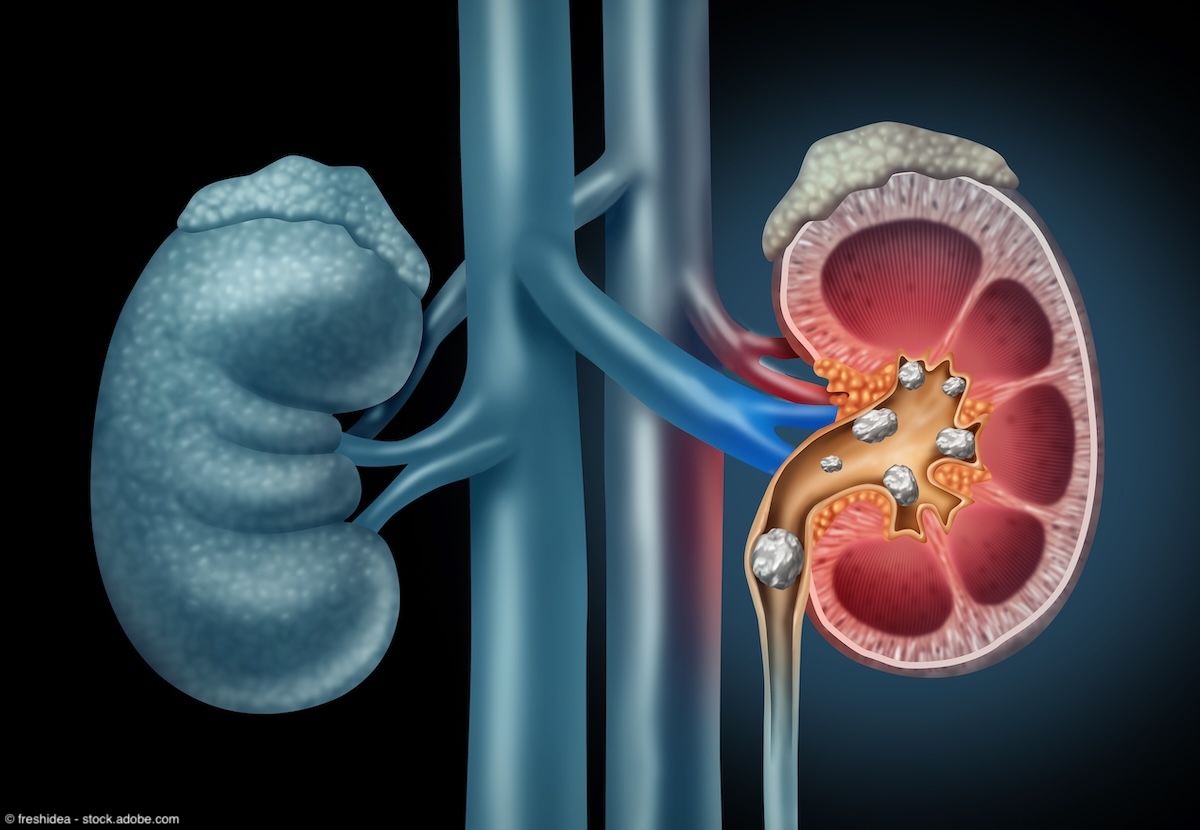


Kidney Stones
Latest News
Advertisement
Video Series

Latest Videos









Shorts

0:42
Why patients choose Break Wave over URS
7 hours ago
by
Ben H. Chew, MD, MSc

0:28
Why Break Wave Lithotripsy is a game changer for stone care
12 days ago
by
Ben H. Chew, MD, MSc

1:01
The Expert APProach: Melissa Kestler, DNP, FNP-BC, on working in a stone clinic
2 months ago
by
Joy Maulik, CRNP(+1 more)

0:23
Jared S. Winoker, MD, on research comparing CVAC 2.0 vs FANS
2 months ago
by
Jared S. Winoker, MD
0:29
Is PCNL dead? with Ben H. Chew, MD, MSc, FRCSC
3 months ago
by
Ben H. Chew, MD, MSc

0:58
Mathew D. Sorensen, MD, MS, FACS, on how Break Wave may reduce stent use
3 months ago
by
Mathew D. Sorensen, MD, MS

1:08
Ezra Margolin, MD, on antibiotic use in patients with stones
4 months ago
by
Ezra J. Margolin, MD

1:07
How Break Wave allows for patient participation in kidney stone treatment
4 months ago
by
Mathew D. Sorensen, MD, MS

1:12
Mathew D. Sorensen, MD, MS, FACS, on how Break Wave lithotripsy works without anesthesia
4 months ago
by
Mathew D. Sorensen, MD, MS
0:57
Matthew A. Love, MD, outlines the safety and efficacy of SURE for treating kidney stones
7 months ago
by
Matthew A. Love, MD
Podcasts



CME Content






Advertisement
More News

The results highlight the complexity of secondary prevention in stone disease.

Because Break Wave uses lower pressure levels, patient discomfort is minimal, allowing treatments to be performed without sedation.

Break Wave lithotripsy uses low-pressure, repeated pulses that generate standing stress waves within the stone.

A recap of the FDA submissions and regulatory decisions in urology from January 2026.

The safety and efficacy of the Break Wave device was assessed in the pivotal SOUND trial.

Walter R. Hsiang, MD, MBA, highlights a study looking at access to care, insurance acceptance, wait times, and costs for stone disease management.

John Michael DiBianco, MD, discusses the design of the ongoing SOUL trial, which is assessing stent omission vs stent placement following uncomplicated ureteroscopy.
As the year comes to a close, we revisit some of this year’s top content on prostate cancer.
The SOUL trial is exploring the feasibility of stent omission following uncomplicated ureteroscopy.

Laser technology is expected to play a major role in the next wave of innovation.
Learn how suction has become central to contemporary ureteroscopic practice and how its integration is reshaping surgical decision-making, treatment algorithms, and the perceived role of percutaneous procedures.
Karen L. Stern, MD, and Naeem Bhojani, MD, FRCSC, outline the advantages of CVAC 2.0, particularly in cases involving larger stone burdens.
Experts compare and contrast direct in-scope suction with the flexible and navigable ureteric access sheath.
In this opening segment, the discussion focuses on the rapid evolution of kidney stone surgery and how suction has transitioned from an aspirational idea to a core component of modern ureteroscopy.
In September 2024, the FDA granted an Orphan Drug Designation and a Rare Pediatric Disease Designation to YOLT-203 for PH1.
"The more I use [SURE], the more applications I see with it," says Matthew A. Love, MD.

A recap of the FDA submissions and regulatory decisions in urology from October 2025.

Avvio Medical plans to submit a de novo application for clearance of the device in early 2026.

Amy E. Krambeck, MD, explained that active suction provided by FANS helps reduce intrarenal pressure by continuously removing irrigation fluid.
Krambeck highlights that FANS combine enhanced maneuverability and effective fragment evacuation, leading to higher stone clearance rates and improved procedural outcomes in endourology.
"Suctioning technology for mini-PCNL is an improvement on relying on passive outflow," says Mantu Gupta, MD.

We recap notable headlines from last month in the benign urology space.
Krambeck pointed to the growing importance of medical management in stone disease prevention.

Margaret A. Knoedler, MD, discusses her experience using the Reverse Deflection CVAC System.

Both the Dornier Hoover Flexible and Navigable Suction Ureteral Access Sheath and the Dornier Axis II Slim single-use ureteroscope are FDA-cleared.
Advertisement
Advertisement
Trending on Urology Times
1
FDA approves capivasertib plus abiraterone and prednisone for PTEN-deficient mHSPC
2
Dean Elterman, MD, highlights efficacy and safety data on the Zenflow Prostatic Spring
3
Toni Choueiri, MD, reacts to FDA approval of adjuvant belzutifan with pembrolizumab for ccRCC
4
FDA approves adjuvant belzutifan with pembrolizumab for ccRCC
5