Special Report

1 expert is featured in this series.

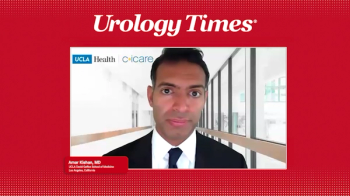
A recently published cost-effectiveness analysis has found that using the ArteraAI Prostate Test to guide androgen deprivation therapy (ADT) decisions in men with intermediate-risk prostate cancer receiving radiotherapy dominates both universal ADT and National Comprehensive Cancer Network (NCCN) risk group-guided ADT. In this program, Amar U. Kishan, MD, Executive Vice Chair for the Department of Radiation Oncology at the David Geffen School of Medicine at UCLA and the UCLA Jonsson Comprehensive Cancer Center, provides the clinical and scientific context needed to interpret those findings, reviewing the limitations of current risk stratification, the validation data supporting the ArteraAI test, and the Markov model methodology underlying the economic analysis.
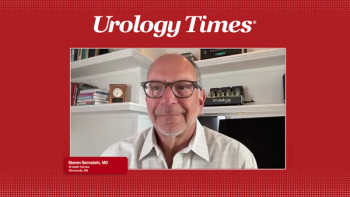
Overactive bladder (OAB) is a chronic, often debilitating condition requiring sustainable long-term management, yet persistence on therapy—whether pharmacologic or procedural—has historically been poor. In this video series, Steven Bernstein, MD, a urologist in community practice in Minnesota, describes how a methodical, patient-centered evolution in his onabotulinumtoxinA (Botox) injection technique—from the standard 20-site protocol to a single-site approach—has dramatically reduced procedural burden while preserving efficacy. Drawing on more than a decade of clinical experience and data from a retrospective chart review of 90 patients, Bernstein reports that the reduced-site protocol yielded a greater than 93% response rate, a retreatment interval of approximately 7.5 months, and persistence rates exceeding those reported in published literature with conventional injection techniques.

1 expert is featured in this series.

Prognostication after radical prostatectomy (RP) remains one of the most clinically demanding challenges in prostate cancer management, particularly for patients who develop biochemical recurrence years after surgery. In this series, R. Jeffrey Karnes, MD, the Dr. Anson Clark Professor of Urology at Mayo Clinic in Rochester, Minnesota, examines the external validation of a post-RP multimodal artificial intelligence (MMAI) prognostic model in a long-term survivor cohort drawn from the Mayo Clinic radical prostatectomy registry.

Man talking with a doctor | Image Credit: © Khunatorn - stock.adobe.com

In this Urology Times News Network, recorded at the 2026 American Urological Association Annual Meeting in Washington DC, experts offer commentary on key updates in prostate cancer research.


Bladder | Image Credit: © Elena - stock.adobe.com

In this Urology Times News Network, recorded at the 2026 ASCO Genitourinary Cancers Symposium, experts offer commentary on key updates in bladder cancer research.

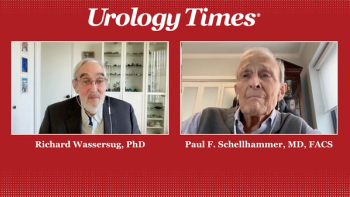
In this video series, Richard Wassersug, PhD, and Paul F. Schellhammer, MD, FACS, give an overview of the Estradiol Initiative, an effort to establish transdermal estradiol as a recognized option for androgen deprivation therapy in advanced prostate cancer.

3d rendered medically accurate illustration of a bladder tumor | Image Credit: © Sebastian Kaulitzki - stock.adobe.com

In this Urology Times News Network, recorded at the 2025 SUO Annual Meeting, experts offer commentary on key updates in bladder cancer research.


In this video series, urologists Karen L. Stern, MD, and Naeem Bhojani, MD, FRCSC, discuss how suction has changed stone surgery, the pros and cons of key techniques like FANS and DISS, and take a closer look at devices such as the CVAC 2.0. They also cover the learning curve, best practices, and where the field is headed next.

Prostate cancer | Image Credit: © Dr_Microbe - stock.adobe.com

In this Urology Times News Network, recorded at the 2025 LUGPA Annual Meeting, experts offer commentary on key updates in prostate cancer research.


In this Urology Times News Network, recorded at the 2025 European Society for Medical Oncology Congress in Berlin, Germany, host Chandler Park, MD, MSc, FACP, interviews Neal D. Shore, MD, FACS, regarding noteworthy prostate and bladder cancer presented at the conference.

This Urology Times RX Review Special Report explores the emergence of subcutaneous immune checkpoint inhibitors in bladder cancer treatment, emphasizing their clinical efficacy, safety, and potential to streamline care. Across the discussion, the series highlights how this innovation can enhance patient experience, improve practice efficiency, and expand access to immunotherapy worldwide.

UT RX Review Mitomycin Video Thumbnail with featured KOLs, Rahul Mehan, MD, and Nick Liu, MD

Rahul Mehan, MD, and Nick Liu, MD, discuss the June 2025 US Food and Drug Administration approval of mitomycin (Zusduri), formerly known as UGN-102, for for adult patients with recurrent low-grade intermediate-risk non-muscle invasive bladder cancer.