

Toni K. Choueiri, MD, discusses the FDA approval of adjuvant belzutifan plus pembrolizumab for clear cell renal cell carcinoma, describing the regimen as a major advancement in kidney cancer treatment.
Toni K. Choueiri, MD, discusses the FDA approval of adjuvant belzutifan plus pembrolizumab for clear cell renal cell carcinoma, describing the regimen as a major advancement in kidney cancer treatment.

Data from the BREEZE trial support the efficacy, safety, and tolerability of the Zenflow Prostatic Spring for BPH-related LUTS.

In this video, Benjamin H. Lowentritt, MD, FACS, discusses findings from the real-world OPTYX study, assessing testosterone suppression and recovery among patients receiving relugolix for advanced prostate cancer.

Jonathan D. Harper, MD, discusses findings from a secondary analysis of the PUSH trial showing that modest increases in urine volume and lower urine osmolality were associated with reduced kidney stone recurrence, even when patients did not reach the guideline-recommended urine output target.

Kevin C. Zorn, MD, FRCSC, FACS, discusses the factors that clinicians should consider when selecting among different MIST options for BPH.

In this video, Nicole L. Miller, MD, FACS, discusses her approach to assessing patients after prior treatment failure for benign prostatic hyperplasia.

Abigail Keller, MD, shares findings showing that nadofaragene firadenovec is associated with increased urine production during instillation compared with gemcitabine/docetaxel.

Praful Ravi, MB, BChir, MRCP, discusses results from PSMAtrack, which assessed changes in PSMA-PET during initial systemic therapy for metastatic hormone-sensitive prostate cancer.

Pedro C. Barata, MD, MSc, FACP, discusses preliminary findings from the phase 3 ProstACT Global study evaluating 177Lu-rosopatamab plus standard of care for patients with mCRPC.

Tanya B. Dorff, MD, FASCO, shares phase 1 data on ABBV-969, an investigational antibody-drug conjugate being explored for metastatic castration-resistant prostate cancer.
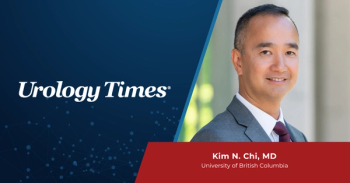
Kim Chi, MD, highlights findings from a pre-planned analysis of the PLUDO trial examining the impact of crossover on survival outcomes between 177Lu-PSMA-617 vs docetaxel in mCRPC.

Lucia Nappi, MD, PhD, FRCPC, highlights key findings from an interim analysis of SWOG S1823, evaluating miR371 for predicting active germ cell malignancy in patients with early-stage testicular cancer.

Alicia K. Morgans, MD, MPH, discusses key findings from the ARACOG study, assessing cognitive outcomes between patients who received darolutamide vs those who received enzalutamide for advanced prostate cancer.
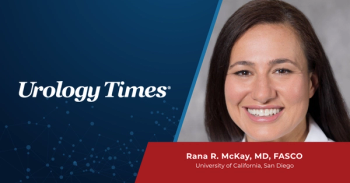
Rana R. McKay, MD, FASCO, highlights phase 2 data on radium-223 dichloride plus cabozantinib for patients with renal cell carcinoma with bone metastases.

Mark Fleming, MD, and Manoj Bupathi, MD, MS, highlight the key studies and sessions in GU oncology that they're most anticipating at ASCO 2026.

Objective performance indicators in robotic surgery are providing the first quantitative framework for evaluating surgical technique, according to Michael Stifelman, MD, professor and chair of urology at Hackensack Meridian Health, whose early prostatectomy data link specific intraoperative metrics to functional outcomes—while governance frameworks, cultural adoption, and the prospect of real-time intraoperative guidance define the near-term challenges and long-term trajectory.
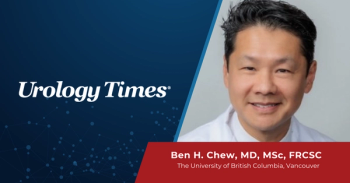
Break Wave lithotripsy met all pivotal non-inferiority end points vs shock wave lithotripsy.

Bilal I. Chughtai, MD, highlights 12-month cystoscopic data from the pivotal IDE trial of the Zenflow Spring System.

Keith Xavier, MD, URPS, highlights data from the TITAN 2 study looking at the impact of site of service on outcomes with the Medtronic implantable tibial neuromodulation system.

Archan Khandekar, MD, highlights key findings from a study evaluating LLM architectures for answering patient-facing urologic questions.
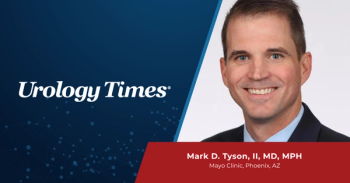
Mark D. Tyson II, MD, MPH, discusses findings from the phse 3b PATAPSCO study, evaluating durvalumab plus BCG for patients with BCG-naïve, high-risk NMIBC.

Mark Garzotto, MD, discusses phase 3 data on aglatimagene besadenovec plus standard-of-care external beam radiation therapy with or without short-course androgen deprivation therapy in localized prostate cancer.

Bashir Al Hussein Al Awamlh, MD, MPH, discusses findings from an international registry study evaluating how baseline sexual interest may influence sexual bother outcomes after treatment for localized prostate cancer.

Sarah P. Psutka, MD, MSc, reflects on her AUA 2026 talk regarding frailty and surgical outcomes in urologic oncology.
Rana R. McKay, MD, FASCO, shares results from the ARASEC study, which evaluated darolutamide plus ADT in mHSPC using a novel external control-arm design.
In this video, recorded at the 2026 American Urological Association Annual Meeting in Washington, DC, Murilo De Almeida Luz, MD, gives an overview of the DAROL study design and key findings.

The phase 1/2 ResQ133A-NMIBC trial (NCT06800963) is evaluating intravesical recombinant BCG in patients with BCG-naïve high-risk NMIBC across US sites, with safety as the primary end point and complete response and disease-free survival as secondary end points, building on European data showing 50% response rates and no dose-limiting toxicities in BCG-unresponsive disease.
Michael S. Cookson, MD, MMHC, FACS, unpacks the significance of the phase 2 ARASEC trial evaluating darolutamide in mHSPC.

The INTIBIA Pivotal Study—the first sham-controlled, double-blind RCT of an implantable tibial nerve stimulation device—demonstrated significantly greater clinically meaningful improvements in symptom bother, health-related quality of life, and patient global impression at 3 months compared with sham, with durable benefits through 12 months.

Chad A. Reichard, MD, highlights real-world data presented at AUA 2026 on re-induction with nadofaragene firadenovec in patients with BCG-unresponsive non–muscle-invasive bladder cancer.