






Prostate Cancer
Latest News
Advertisement
Latest Videos





CME Content

Advertisement
More News
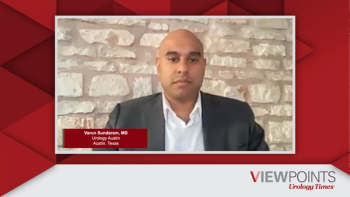
Following a review of rectal spacer options, Varun Sundaram, MD, offers clinical perspectives on hyaluronic acid spacers for patients with prostate cancer undergoing radiation.

Clinical insights on challenges and complications of rectal spacing encountered in the treatment of patients with prostate cancer.

With multiple PSMA PET tracers available, Jaideep S. Sohi, MD, shares insights about the benefits of the various options and his real-world experience with their use in practice.
A prostate imaging expert shares tips for how to interpret PSMA PET/CT imaging results as well as when re-imaging is recommended.
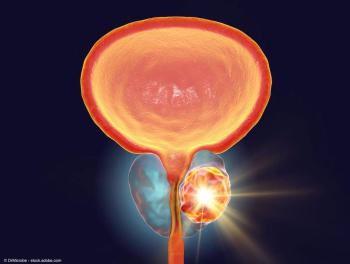
A response by the FDA is expected by February 2024.
Jaideep S. Sohi, MD, discusses how PSMA PET imaging has impacted diagnosis and management of prostate cancer in clinical practice, when and why it should be considered over conventional imaging, and which PSMA PET tracers are available.

Christopher M. Pieczonka, MD and Jose De La Cerda, MD, MPH share their expertise in managing metastatic castration-resistant prostate cancer (mCRPC), focusing on the demographics in their distinct clinical practices and unique challenges they encounter nuances of treatment.

Eric J. Small, MD, is an international leader in prostate cancer research and has published more than 430 peer-reviewed articles.

“I think if you were to ask what surprised me, I didn't expect it to have more of an effect on pain than anxiety,” says Heidi J. Rayala, MD, PhD.
Specialists in the field of prostate cancer discuss their approaches for discussing rectal spacing with patients.
Comprehensive insights on the utilization of rectal spacers with proton beam radiation and brachytherapy in prostate cancer.

In this episode, David M. Albala, MD, and Sanoj Punnen, MD, discuss precision medicine and the use of biomarker tests in prostate cancer screening and detection.

Dr. Shawn Zimberg and Dr. Dean Laganosky discuss the BioProtect Balloon Transplant System, a rectal spacer for use in prostate cancer radiation.

"We're entering an era of more trauma-informed care, and trying to be sensitive to the fact that some of these invasive procedures can be a trigger for people because they're in that moment of feeling helpless and they don't have really a lot of control over the situation," says Heidi J. Rayala, MD.
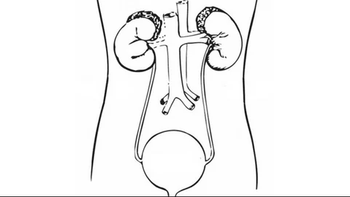
Experts on prostate cancer outline the best candidates for rectal spacing and outline factors that influence rectal spacer placement.
Prostate cancer specialists provide insights on stereotactic body radiation therapy (SBRT) and hypofractionation and their relationship to optimal rectal spacing.
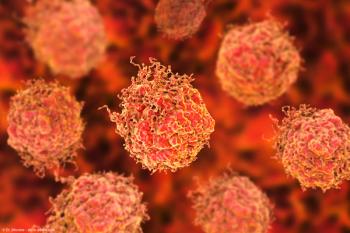
“The study highlights the importance of considering how altering cell metabolism could impact prostate cancer and its response to treatment," says Jenna Giafaglione.
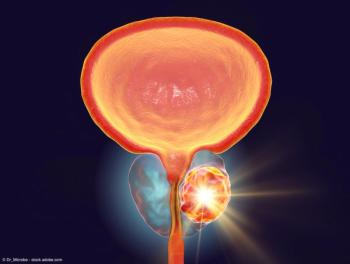
“This next-generation rectal spacing option is the first of its kind...and has the potential to provide an enhanced degree of protection from the genitourinary and rectal effects of prostate cancer radiation therapy,” said Dr. Laganosky.

Overall, Black men were 24% less likely to receive or be prescribed a novel hormonal therapy agent compared with White men.
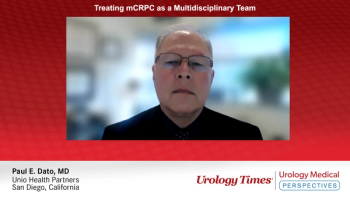
In the third article of this series, Paul E. Dato, MD, provides comprehensive insights on the multidisciplinary care of patients with metastatic castration-resistant prostate cancer.
Urologists offer their perspectives on toxicity seen in patients with prostate cancer who are undergoing radiation treatment.
Experts on prostate cancer discuss the risks, complications, and safety considerations for patients with prostate cancer who are considering radiation therapy.
In this installment, expert Paul E. Dato, MD, discusses the value of a multidisciplinary team in managing patients with mCRPC and considers how his institution ensures patients receive best available therapy.

“Health literacy pushed people towards active surveillance, which I thought was an interesting finding,” says Adam B. Murphy, MD, MBA, MSCI.
Advertisement
Advertisement
Trending on Urology Times
1
FDA approves sildenafil oral film for men with erectile dysfunction
2
The UroOnc Minute: Adjuvant Therapy in Renal Cell Carcinoma, with Brian Shuch, MD
3
Sarah Azari, MD, on early sexual health education for women with bladder cancer
4
URO-1 prostate biopsy devices adopted across Novant Health System as clinical study continues
5