






Prostate Cancer
Latest News
Advertisement
Latest Videos




CME Content


Advertisement
More News

"I tried to cover the focal therapies, at least just review some of the new ones that are coming in, even though they're still not necessarily 100% mainstream," says Andrew L. Siegel, MD.

A group of urologists and radiation oncologists detail how they were trained on the utilization of rectal spacers and offer practical advice for other clinicians treating patients with prostate cancer.
The panel provides clinical insights on the placement of rectal spacers, the management of toxicities, and the counseling of patients with prostate cancer following rectal spacer placement.

"In our multivariate analysis, we actually found that there was no significant difference between the groups," says Kevin Shee, MD, PhD.
In this companion article, Jaideep S. Sohi, MD, shares insights on PSMA-PET imaging’s impact on real-world diagnosis and management of prostate cancer.

"It's no surprise that there are many people interested in active surveillance and how we can be doing it better," says Kevin Shee, MD, PhD.

"This is just another way that we can exploit the body's own natural system to take care of cancer," says Daniel P. Petrylak, MD.

Neeraj Agarwal, MD, discusses an analysis from the phase 3 TITAN trial that explored the correlation between PSA response and survival among patients with metastatic castration-sensitive prostate cancer receiving apalutamide.
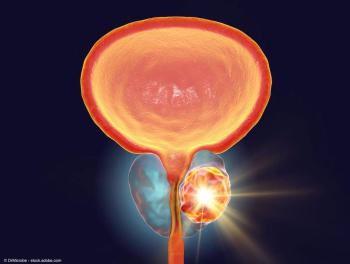
Zeyad Schwen, MD, a urologic oncologist at Cleveland Clinic, discusses how patient factors and cancer characteristics are key to deciding between focal therapies and whole gland treatment for prostate cancer.
Urologists and radiation oncologists discuss the multidisciplinary approach to treating patients with prostate cancer and how they address treatment complications.
A detailed overview of clinical trials and ongoing research in prostate cancer investigating rectal spacers.

The phase 1/2 study is scheduled to commence in the first half of 2024.

The combination is approved for the treatment of patients with metastatic castration-resistant prostate cancer, regardless of mutation status.

The study is enrolling patients with relapsed/refractory metastatic castration-resistant prostate cancer who have received at least 1 next-generation androgen receptor pathway inhibitor.
The phase 1/2a CYPIDES trial assessed the safety and preliminary efficacy of ODM-208 in heavily pretreated patients with metastatic castration-resistant prostate cancer.

"I find writing kind of relaxing. I like it like I like sitting down and reading for an hour," says Andrew L. Siegel, MD.

The payment rate for the prostate cancer test went into effect on January 1, 2024.
Prostate cancer specialists outline the pros and cons of the rectal spacer options for patients with prostate cancer and discuss factors that influence spacer choice.
The expert panel outlines visibility considerations with the 3 rectal spacer options when treating patients with prostate cancer with radiation therapy.

The open-label CaRe PC trial plans to enroll up to 30 adult patients with mCRPC, who will be treated across 3 dose levels of INKmune.

"Nowadays, the complexity of potential management options have gotten increasingly difficult to express to patients," says Andrew L. Siegel, MD.
Over a decade of data document a continued increase in the use of hypofractionation in patients with localized prostate cancer.
Over the past year, the FDA approved a multitude of new treatments and devices for use in urology practice.

Jeffrey T. Schiff, MD, MPH, describes PEG hydrogel spacers and discusses their role in treating patients with prostate cancer undergoing radiation therapy.

Rizwan Nurani, MD, an expert on prostate cancer, describes the role of balloon spacers in the treatment space.
Advertisement
Advertisement
Trending on Urology Times
1
FDA approves sildenafil oral film for men with erectile dysfunction
2
Integration of doublet and triplet therapy in metastatic prostate cancer
3
The UroOnc Minute: Adjuvant Therapy in Renal Cell Carcinoma, with Brian Shuch, MD
4
Sarah Azari, MD, on early sexual health education for women with bladder cancer
5