


Bladder Cancer
Latest News
Advertisement
Latest Videos





CME Content


Advertisement
More News

The approval is based on findings from the EV-301 and EV-201 trials.

Dr. Michael Devitt, discusses whether circulating tumors cells are ready for primetime as a diagnostic/prognostic biomarker in urothelial carcinoma.

Recent trial demonstrates an improvement in outcomes with an adjuvant immune checkpoint inhibitor in urothelial cancer.
Trilaciclib is a CDK4/6 inhibitor that has been shown to help lower the occurrence of chemotherapy-induced myelosuppression.
The PD-1 inhibitor met the primary end point in a monotherapy trial but fell short when used in a combination regimen in a separate trial.
"This study provides important and clinically useful information that can be used to plan the intensity of treatment and counsel our patients regarding the cancer-related and QOL-related outcomes after treatment," writes Badar M. Mian, MD.
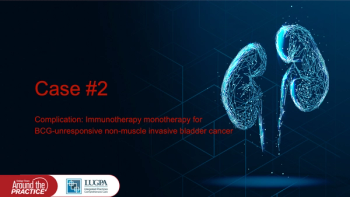
In Urology Times’ monthly installment of Around the Practice, experts discuss adverse event management from various treatments for prostate and bladder cancer.
The Uro-G single-use device arrives at a time when the FDA is actively investigating reports of infections associated with reusable cystoscopes.
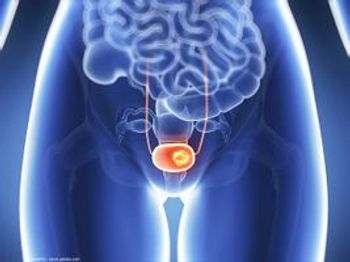
Cystoscopy failed to detect residual muscle invasive bladder cancer in one-fourth of patients at the time of radical cystectomy.

Results of the phase 3 CALGB 90601 trial were published online in the Journal of Clinical Oncology.
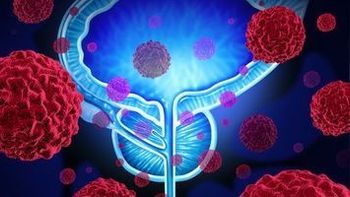
The antibody-drug conjugate received a priority review for patients with locally advanced or metastatic urothelial carcinoma with disease progression.
The FDA is scheduled to make a decision on the expanded approval for the antibody-drug conjugate on or before August 17, 2021.

The data from the pivotal phase 2 TROPHY-U-01 trial supported the FDA approval of sacituzumab govitecan for the treatment of patients with urothelial carcinoma.

“Our findings highlight an urgent need for more accurate, patient-friendly social media content,” says Dr. Stacy Loeb.
Final FDA decision on approvals is still pending.
The agency made the designation on the basis of recently reported data from the phase 3 CheckMate 274 trial that found a statistically significant improvement in disease-free survival in patients treated with the PD-1 inhibitor.
"After a long period of stagnation and inertia, the bladder cancer space is alive and full of innovation and activation," writes Michael S. Cookson, MD, MMHC.

Myriad therapies in the pipeline will change treatment landscape.
Padeliporfin ImPACT previously received FDA Fast Track and Orphan Drug designations for the treatment of patients with upper tract urothelial cancer.

The applications are supported by data from the EV-301 and EV-201 trials.
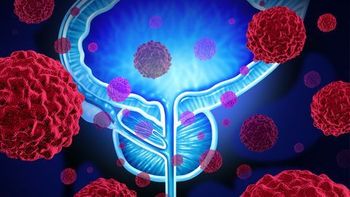
Galsky highlights final OS data from the IMvigor130 trial, along with an exploratory analysis examining outcomes by type of chemotherapy used.
The FDA has approves sacituzumab govitecan (Trodelvy) for patients with prevviously treated locally advanced or metastatic urothelial cancer.

Michael Devitt, MD, discusses the choice between erdafitinib and enfortumab vedotin in previously treated urothelial carcinoma.
The panel recommended adding data from the phase 3 KEYNOTE-361 trial to the label for pembrolizumab for its indication for patients with advanced or metastatic urothelial carcinoma.
The application is supported by findings from the phase 3 EV-301 trial.
Advertisement
Advertisement
Trending on Urology Times
1
FDA approves sildenafil oral film for men with erectile dysfunction
2
Integration of doublet and triplet therapy in metastatic prostate cancer
3
The UroOnc Minute: Adjuvant Therapy in Renal Cell Carcinoma, with Brian Shuch, MD
4
Sarah Azari, MD, on early sexual health education for women with bladder cancer
5