


Bladder Cancer
Latest News
Advertisement
Latest Videos





CME Content
Advertisement
More News
“While Jelmyto is approved for both retrograde and antegrade instillation, the instructions for administration address retrograde instillation, and this is the first time that data on antegrade instillation has been documented in a clinical setting for this chemoablative therapy,” said Katie Murray, DO.

“We definitely don't have a clear standard,” says Shawn Dason, MD, FRCSC.

“These findings are an internal validation that the disparities we're seeing are real,” says Padraic O’Malley, MD, MSc, FRCSC.

At 3 months, 83% of patients (5/6) who received EG-70 achieved complete response, according to the treatment manufacturer, enGene.
“There are a few different approaches in perioperative medical chemotherapy or immunotherapy treatment, and it's unclear as to how we should consider all these different approaches,” says Shawn Dason, MD, FRCSC.

“We have to be more mindful and thoughtful about the fact that certain populations are underrepresented in clinical trials, and that’s likely due to a number of factors,” said co-author Padraic O’Malley, MD, MSc, FRCSC.
Karim Chamie, MD, describes what treatments might be on the horizon for muscle invasive bladder cancer and provides some clinical pearls to manage patients with MIBC.
A bladder cancer expert several ongoing clinical trials in the neoadjuvant and adjuvant setting.
An oncologist reviews the use of nivolumab in the adjuvant setting for treating high-risk muscle invasive bladder cancer and experience from his practice.
Dr. Karim Chamie details the available primary and adjuvant treatments for muscle invasive bladder cancer.
Karim Chamie, MD, presents the case of a 75-year-old woman with high-risk muscle invasive bladder cancer.

The phase 3 ENVISION study is exploring the mitomycin-containing reverse thermal gel UGN-102 as primary chemoablative therapy in patients with low-grade, intermediate-risk non-muscle invasive bladder cancer.
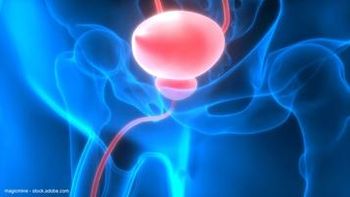
The efficacy of the neoadjuvant triplet was observed regardless of PD-L1 status.

“The message is to please consider kidney preservation for these patients with TA low-grade disease,” says Seth P. Lerner, MD.
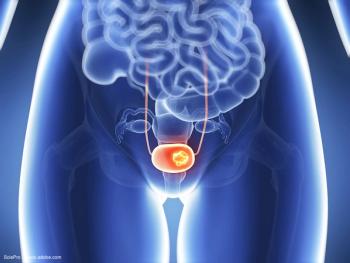
In this interview, Brant A. Inman, MD, MS, FRCSC, discusses how investigational chemothermotherapy could mitigate some challenges presented by current NMIBC treatments.
“I think that these data firmly establish UGN-101, or Jelmyto, as a bona fide treatment option for kidney preservation for patients with low-grade, non-invasive urothelial cancer in the upper urinary tract,” says Seth P. Lerner, MD.
“Of the 42 patients who achieved a complete response, 41 of those were evaluable for duration of response, which was the focus of the manuscript that was just published last month,” says Seth P. Lerner, MD.

Experts at the Cleveland Clinic are assessing standard surgical approaches in bladder cancer and identifying new ones.
Ali Raza Khaki, MD, discusses managing toxicities to ensure patients can continue to receive treatment with the antibody-drug conjugate enfortumab vedotin.

In the study, adding maintenance avelumab to best supportive care (BSC) led to a 31% reduction in the risk of death versus BSC alone in patients with unresectable locally advanced or metastatic urothelial cancer.

Erdafitinib is approved by the FDA for the treatment of adult patients with FGFR3/FGFR2-positive locally advanced or metastatic bladder cancer that has progressed on platinum-containing chemotherapy.

The investigators reported that overall perioperative transfusion rates were significantly lower in patients undergoing robot-assisted radical cystectomy.
Phillip Palmbos, MD, PhD, highlights four key questions that need to be answered in the first-line and neoadjuvant bladder cancer settings.

CheckMate-274 supported the FDA approval of nivolumab for the adjuvant treatment of patients with urothelial carcinoma.

Phillip Palmbos, MD, PhD, explains the latest research findings on the role of chemoimmunotherapy in patients with bladder cancer.
Advertisement
Advertisement
Trending on Urology Times
1
FDA approves sildenafil oral film for men with erectile dysfunction
2
The UroOnc Minute: Adjuvant Therapy in Renal Cell Carcinoma, with Brian Shuch, MD
3
Integration of doublet and triplet therapy in metastatic prostate cancer
4
URO-1 prostate biopsy devices adopted across Novant Health System as clinical study continues
5