


Prostate Cancer
Latest News
Advertisement
Latest Videos




CME Content

Advertisement
More News

Investigators found that benefits of treatments that are observed in trials also appear in the real world.
The trial has enrolled 201 patients with localized prostate cancer to date.

Initial study results may be available as soon as the first half of 2026.

Expert discusses the relationship between RCTs and real-world efficacy of prostate cancer treatments
"To me, the key take-home is that the benefits that we see in clinical trials, we actually can replicate in the real world," says Stephen J. Freedland, MD.

The committee determined that the study was unlikely to meet its dual primary end points of radiographic progression-free survival and overall survival.

The investigators reported that ultra-low PSA responses “were associated with prolonged rPFS and delayed progression to mCRPC and PSA progression.”
The investigators reported that treatment with darolutamide reduced the risk of radiological progression or death by 49% in Black men.
More than 80% of patients in both groups had a full recovery of testosterone.
Helen Bernie, DO, MPH, joins the show to discuss data from her Indiana University team from the floor at AUA 2025.

Social media spreads significant misinformation about prostate cancer. Experts urge clinicians to provide trusted information sources.

Clarius Mobile Health said it will be demonstrating the application at the AUA Annual Meeting in Las Vegas, Nevada.
"In this large study of over 1500 men with an elevated PSA, we found that a low IsoPSA is incredibly reassuring,” says Christopher J. Weight, MD.
The PRELUDE trial is assessing oncological outcomes with neoadjuvant 177Lu-PSMA-617 in high-risk, localized prostate cancer.

We preview several noteworthy P2 presentations in the urologic oncology space.

“We are witnessing the dawn of teletreatment,” says Jihad Kaouk, MD, FACS.

Enzalutamide plus talazoparib significantly extended overall survival vs enzalutamide alone in mCRPC.
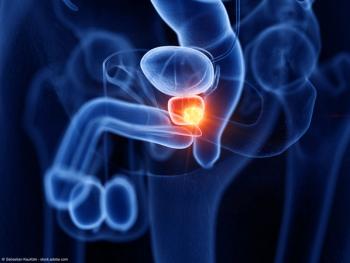
The first patient in the trial will be receiving 67Cu-SAR-bisPSMA in combination with enzalutamide.
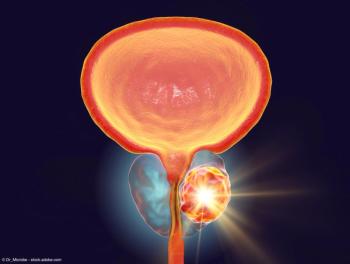
"The goal of the PRECISION study is to ensure that treatment with 3 radiation doses does not lead to greater side effects than those observed in the PACE-B study," says Professor Duncan B. McLaren, MBBS.
"Building on decades of research into the genetic markers of prostate cancer, our study shows that the theory does work in practice—we can identify men at risk of aggressive cancers who need further tests and spare the men who are at lower risk from unnecessary treatments," says professor Ros Eeles.
Betty Wang, MD, provides insight on 3 presentations that she believes “may be game changing” in urology.

"We should not be preemptively reducing the dose for all our patients, because half of the patients will never develop grade 3/4 anemia," says Neeraj Agarwal, MD, FASCO.
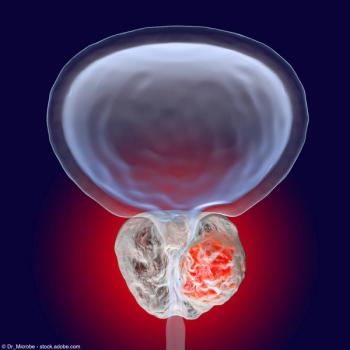
"This finding reinforces PROSTOX ultra as a true measure of the biological response to radiation, independent of treatment era or technique that can identify the safest course of treatment to avoid toxicity," says Amar U. Kishan, MD.

A lookahead of the notable FDA decisions and conferences slated for Q2 2025.
"We demonstrate that patients with metastatic disease stayed on therapy longer—a median of 9 months vs 7 months for the non-metastatic patients," says Rana R. McKay, MD, FASCO.
Advertisement
Advertisement
Trending on Urology Times
1
FDA approves sildenafil oral film for men with erectile dysfunction
2
The UroOnc Minute: Adjuvant Therapy in Renal Cell Carcinoma, with Brian Shuch, MD
3
Integration of doublet and triplet therapy in metastatic prostate cancer
4
URO-1 prostate biopsy devices adopted across Novant Health System as clinical study continues
5