


Prostate Cancer
Latest News
Advertisement
Latest Videos





CME Content

Advertisement
More News
The phase 2 CELLVX-230 trial is exploring the potential of FK-PC101 to delay or prevent prostate cancer recurrence following prostatectomy.

"Honestly, there really isn't another measure of sexual quality of life for females that addresses the specific concerns of the female partners of patients with prostate cancer," says Stacy Loeb, MD, MSc, PhD (hon).

Data from the CAPItello-281 trial also showed a trend toward an improvement in overall survival.

"I think that now we have good data that patient-reported outcomes have to be considered in these patient populations," says Andrew C. Peterson, MD, MPH.

"Every practice is going to be a little bit different on how they would like to approach this," says Michael Jenson, PA-C.
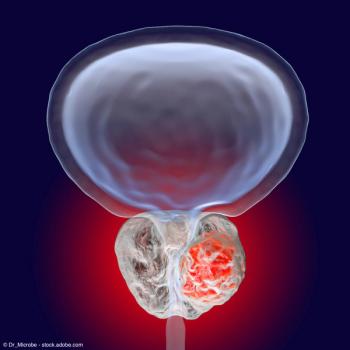
In the recent news release, Koelis reported that the final patient was enrolled in the VIOLETTE study in September 2024.

The sNDA is supported by data from the pivotal phase 3 ARANOTE trial.
“Prostate cancer patients with life expectancies of less than 5 or 10 years were being subjected to treatments that can take up to a decade to significantly improve their chances of surviving cancer, despite guidelines recommending against treatment," says Timothy J. Daskivich, MD.
Final completion of the ECLIPSE trial is anticipated for February 2029.

Oliver Sartor, MD, discusses how unmet needs and clinical challenges for PSMA imaging in prostate cancer patients include standardizing interpretation criteria, addressing false negatives in certain tumor phenotypes, improving accessibility and cost-effectiveness, and developing strategies for patients with low PSMA expression or PSMA-negative disease.

“Our study is distinguished by long follow-up, out to 12 years, looking at a broad spectrum of key complications," says Joseph M. Unger, PhD.
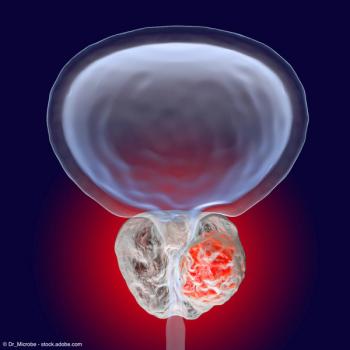
The decision was based on an interim readout from the trial, which showed that ONCT-534 did not lead to any clinically meaningful improvement of disease.

"Patients, in general, have been extremely happy, and the one thing that I think keeps them happy is I'm continually evolving with how I give the information," says Michael Jenson, PA-C.
"The 5-year data from STOMP showed that about a third of men could go 5 years without requiring ADT, which is exciting," says Bridget F. Koontz, MD, FASTRO.

In total, the study plans to enroll 84 adult patients across clinical trial sites in the United States and Australia.
Oliver Sartor, MD, discusses how 68gallium PSMA-11 PET is indeed the preferred imaging modality for confirming eligibility for lutetium therapy, but when unavailable, alternative options such as F-18 PSMA PET, conventional bone scintigraphy, or CT/MRI may be considered, albeit with potential limitations in sensitivity and specificity.
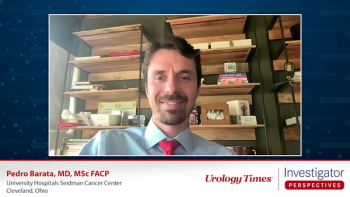
Panelists discuss how the increased use of androgen receptor–targeted therapy in clinical practice may impact the effectiveness of PARP inhibitor combinations like talazoparib in the TALAPRO-2 study, while also addressing safety concerns, potential differences in trial populations, and the need for future studies to optimize treatment approaches for various metastatic prostate cancer patient subgroups.
Panelists discuss how the PROfound trial (NCT02987543) demonstrated the efficacy and safety of olaparib monotherapy in metastatic prostate cancer patients with homologous recombination repair gene alterations, highlighting its potential as a targeted treatment option and its impact on the landscape of precision medicine in prostate cancer management.

Michael Jenson, PA-C, gives an overview of the Surgical Impotence Management Strategy program at Minnesota Urology.
The decision comes after a pre-specified futility analysis determined that it was unlikely that the study would meet its primary end point.
The NDA submission is supported by data from a single-arm, phase 3 trial of leuprolide mesylate administered as 2 injections, 3 months apart.
The panelist discusses how the limited availability of 68gallium PSMA-11 gozetotide in clinical practice poses challenges and suggests potential strategies to increase accessibility, such as expanding production facilities, improving distribution networks, and exploring alternative radiotracers with longer half-lives.
Panelists discuss how PARP inhibitor monotherapy trials like TALAPRO-1 (talazoparib) and TRITON-3 (rucaparib) have demonstrated efficacy and safety in treating metastatic prostate cancer patients with homologous recombination repair gene alterations, providing important insights into targeted therapy options for this specific patient population.
Panelists discuss how the PEACE III trial findings demonstrate the superiority of combining radium-223 with enzalutamide in treating metastatic castration-resistant prostate cancer, highlighting improved efficacy, the critical importance of bone-protective agents in reducing fracture risk, and the potential for this triplet therapy to become the new standard of care over enzalutamide alone.

Bridget Koontz, MD, highlights the design and enrollment criteria of the ongoing phase 2 NRG-GU011 trial.
Advertisement
Advertisement
Trending on Urology Times
1
FDA approves sildenafil oral film for men with erectile dysfunction
2
Integration of doublet and triplet therapy in metastatic prostate cancer
3
The UroOnc Minute: Adjuvant Therapy in Renal Cell Carcinoma, with Brian Shuch, MD
4
Sarah Azari, MD, on early sexual health education for women with bladder cancer
5