




Prostate Cancer
Latest News
Advertisement
Latest Videos






CME Content

Advertisement
More News

Olaparib plus abiraterone and prednisone or prednisolone was granted FDA approval in May 2023 for the treatment of adult patients with deleterious or suspected deleterious BRCA-mutated mCRPC.
Panelists discuss how criteria such as patient comorbidities, disease progression levels, and treatment goals should be considered when selecting the appropriate form of abiraterone for patients with mCRPC, and also explore the potential benefits and drawbacks of using micronized abiraterone in specific patient populations.
Panelists discuss how the STAAR study (Stein, 2018) indicates that the micronized abiraterone formulation results in lower average serum testosterone levels in 25% of patients compared to 17% with the originator formulation, potentially influencing treatment selection.

"The patients who received SBRT were more likely to be Caucasian. We observed that far fewer Black men were treated with SBRT in our cohort," says Michael Stencel, DO.

Treatment with an ARPI extended overall survival (OS), with a median OS of 38.7 months in the ARPI arm vs 21.7 months in the taxane arm and 21.8 months in the physician’s choice of treatment arm.

Data indicated that the test preferentially detected high-grade, clinically significant prostate cancer, with 93% of detected cancers being GG3-5 and 67% being stage 3 or 4.

The key opinion leaders explore various treatment approaches for prostate cancer, including surgery, radiation, and hormone therapy, explaining how biomarker results influence their treatment choices. They also detail the specific criteria they use to select between treatment options based on biomarker testing outcomes.
The panelists examine the challenges and limitations they've faced when using the Gleason score for risk assessment in prostate cancer patients, while also highlighting how biomarker testing has informed and guided their treatment strategies.
This discussion explores the differences in the effects of abiraterone formulations when combined with prednisone or methylprednisolone.
This discussion provides an overview of abiraterone and the key differences between micronized and non-micronized formulations, including considerations for choosing between the two formulations.

"The patients in these networks that were treated with SBRT certainly lived in areas with increased incomes," says Michael Stencel, DO.

Experts on prostate cancer discuss current unmet needs in the therapeutic landscape and outline treatment considerations for patients receiving androgen deprivation therapy.

Stephen Freedland, MD, discusses the role of GnRH agonists and antagonists on improving cardiovascular outcomes in patients with prostate cancer.

"The number of treatment centers that are offering stereotactic body radiation [grew] over the course of the study," says Michael Stencel, DO.
Key opinion leaders discuss considerations for sequencing androgen receptor-targeted therapies in metastatic castration-resistant prostate cancer, evaluating their benefits in first-line versus second-line treatment settings.
Key opinion leaders explore strategies for managing common side effects associated with metastatic castration-resistant prostate cancer (mCRPC) treatments, including androgen receptor-targeted therapies.
Medical oncologists explore risk stratification strategies for newly diagnosed patients with prostate cancer, emphasizing the significant role of the Gleason score in diagnosis and prognosis.
The key opinion leaders explore risk factors for prostate cancer, detailing both general risk groups and high-risk populations more susceptible to developing the disease.

“This study is a breakthrough because it is the first trial to show that a non-hormonal drug can induce durable complete remissions in recurrent prostate cancer patients with BRCA2 mutations—one of the most aggressive subtypes of this disease,” says Emmanuel S. Antonarakis, MD.
Experts on prostate cancer discuss the relationship between prostate cancer and cardiovascular disease, highlighting ongoing research for safer treatment.
Focusing on castration-resistant prostate cancer, the panel reviews treatment options for patients with metastatic and nonmetastatic disease.
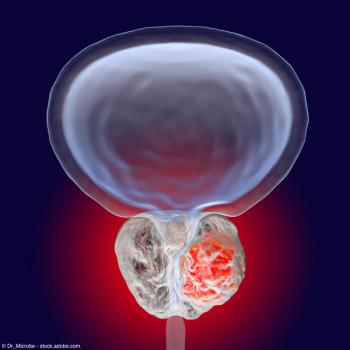
The phase 1 trial is assessing the safety and tolerability of MOMA-313 as both a monotherapy and in combination with olaparib in patients with HR-deficient advanced or metastatic solid tumors.
Key opinion leaders explore the role of androgen receptor-targeted therapy in mCRPC.
Key opinion leaders explore the expanding treament landscape for mCRPC.
Advertisement
Advertisement
Trending on Urology Times
1
FDA approves sildenafil oral film for men with erectile dysfunction
2
The UroOnc Minute: Adjuvant Therapy in Renal Cell Carcinoma, with Brian Shuch, MD
3
Head-to-head analysis shows OS benefit with apalutamide vs darolutamide in mCSPC
4
URO-1 prostate biopsy devices adopted across Novant Health System as clinical study continues
5