


Prostate Cancer
Latest News
Advertisement
Latest Videos





CME Content

Advertisement
More News

“It's the next evolution of being able to provide precision care for our patients in the area of prostate cancer,” says Nitin K. Yerram, MD.
The panel discusses how fusion-guided biopsy can inform patient eligibility for focal therapy in prostate cancer.
A panel of experts on prostate cancer discuss the role for fusion-guided biopsies in active surveillance for patients with prostate cancer.

The fast track designation for BNT324/DB-1311 is supported by safety and efficacy data from an ongoing phase 1/2 trial of the ADC in patients with advanced/metastatic solid tumors.

A panel of experts on prostate cancer share strategies for monitoring patients and discuss whether to use PSMA to monitor treatment response.
Experts on prostate cancer discuss the ideal timing and frequency of PSMA-PET imaging and the role of different PSMA-PET agents.
"Looking at data, if you apply IsoPSA in a consistent manner, based on the studies published, you'll see up to a 55% reduction in unnecessary biopsies," says Jason M. Hafron, MD.

Data from SEER showed a median OS of 23.0 months between the years 2000 to 2004 in patients with mHSPC, which increased to 30.0 months in 2015 to 2019.

"Our data showed that the patient regret scores were very, very low in looking at the patients that went home the same day," says David I. Lee, MD, FACS.
Focusing on active surveillance of patients with prostate cancer, discussion centers around the role of PSMA-PET imaging and the implications of negative scans.
The panel discusses how PSMA-PET imaging informs treatment decisions for patients with prostate cancer.
Focusing on the role of systematic biopsy, the panel provides clinical insights on biopsy practice patterns after encountering suspicious-looking areas on MRI.
Experts on prostate cancer focus on the differences between fusion-guided technologies, highlighting cognitive-based and software-based fusions.
"There's obviously a huge interest in focal therapy for prostate cancer, largely because we want to try to prevent the overtreatment of prostate cancer and also develop better approaches to deliver high-quality treatment options for patients," says Timothy D. McClure, MD.
“Our trial’s preliminary major finding is that PSCA-directed CAR T cells may be effective against mCRPC," says Saul J. Priceman, PhD.
“Again, the importance of this paper to clinical practice is that it gives us real numbers on what the likelihood is of cancer in those patients with PI-RADS 3 or less,” says Jason M. Hafron, MD.
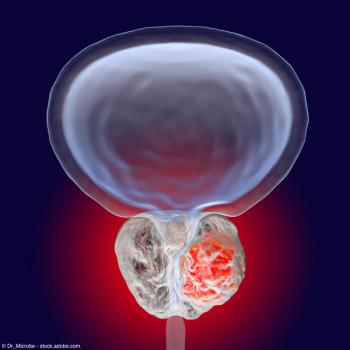
The negative margin rate was 72.8% with UnfoldAI vs 1.6% with SOC, translating to a 45-fold increase in accurately identifying cancer extent with the AI tool.

"To me, the most compelling outcome is really the quality-of-life outcomes. General quality of life as well as emotional quality of life improved in the intervention group significantly," says Jill M. Hamilton Reeves, PhD, RD, CSO.
"We concluded that to improve cost-effectiveness, prostate cancer screening strategies should focus on reducing false positives and overdiagnosis," says Roman Gulati, MS.
Steven Finkelstein, MD, FACRO, discusses PSMA-PET imaging practices for patients experiencing biochemical recurrence.
Experts on prostate cancer offer clinical insights on identifying the appropriate patients for PSMA-PET imaging.
The panel discusses data on the accuracy of MRI-targeted or fusion-based biopsy procedures compared with systemic biopsy or MRI alone.
Firas F. Abdollah, MD, provides insights on how MRI- or fusion-guided technologies are used with transrectal and transperineal biopsy procedures and how they improve traditional biopsy procedures.
Data from a phase 1 study of KPG-121 were also recently presented at the 2024 ASCO Annual Meeting.
“We hope that the survey can be helpful in practice to actually assess and give advice to some of these partners of patients, in addition to the questionnaires that we use for the patients themselves,” says Stacy Loeb, MD, MSc.
Advertisement
Advertisement
Trending on Urology Times
1
FDA approves sildenafil oral film for men with erectile dysfunction
2
The UroOnc Minute: Adjuvant Therapy in Renal Cell Carcinoma, with Brian Shuch, MD
3
Integration of doublet and triplet therapy in metastatic prostate cancer
4
URO-1 prostate biopsy devices adopted across Novant Health System as clinical study continues
5