





Prostate Cancer
Latest News
Advertisement
Latest Videos





CME Content


Advertisement
More News

The anonymous online survey, is meant to gain information “from urologists about the current survivorship care that is provided for survivors of prostate cancer,” according to Stacy Loeb, MD, MSc.

MRI before biopsy with prostate cancer screening was associated with both a clinical and cost-effectiveness benefit compared with a biopsy-first pathway.

“It’s an extremely useful tool,” says Jonathan D. Tward, MD, PhD, of the Prolaris test.

PSA response rate was higher with the investigational radioligand therapy.

“The most important finding is that post-abiraterone, [bipolar androgen therapy] can markedly improve the magnitude and duration of response to enzalutamide,” the authors wrote.
Providers must carefully consider treatment options to align with patient preference.

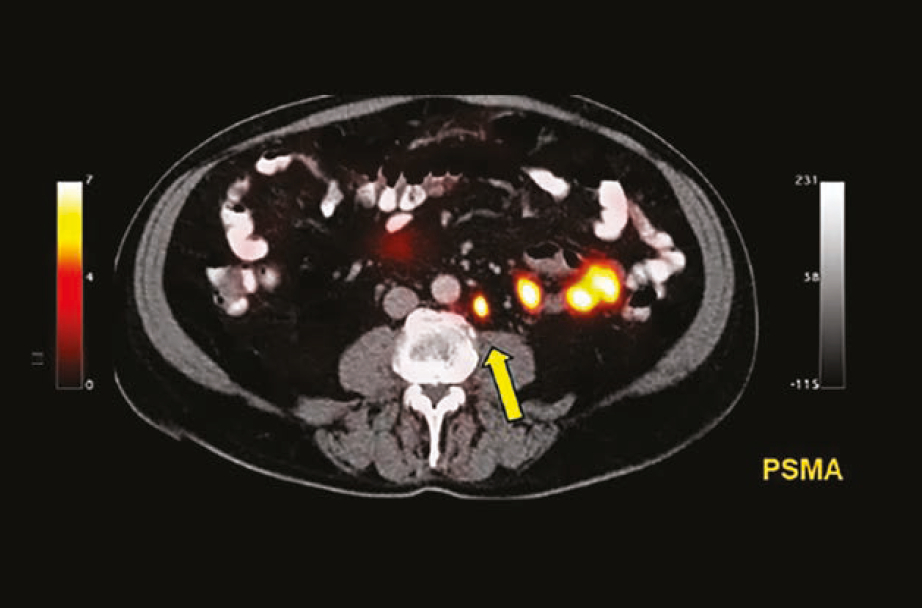
Yu discusses the background of PSMA-PET imaging, current and emerging PSMA imaging tools/therapeutics, and the future of the novel technique in prostate cancer.

Opportunity exists to develop superior risk assessment models in prostate cancer.

The outcome of the Decipher Prostate test was independently associated with overall survival, prostate cancer–specific mortality, and risk of metastasis.

“I find [the Prolaris test] to be a very helpful clinical tool,” says Jonathan D. Tward, MD, PhD.

Hear from key opinion leaders in the urology space as they discuss 2 complex cases across the multidisciplinary approach for an incidentally discovered adrenal mass and localized, high-risk prostate cancer with oligometastasis at diagnosis.

Abiraterone/prednisone can increase survival in prostate cancer; however, most patients develop resistance between 9 and 16 months after starting treatment.

“To reduce the incidence of metastatic prostate cancer in the United States, we support policies that promote shared decision making to optimize PSA screening," said Vidit Sharma, MD.

In this interview, Emmanuel S. Antonarakis, MD, provides an overview of rucaparib (Rubraca) and olaparib (Lynparza), discusses the key trials that led to their approvals, and explains the urologist’s role in their use.

A streamline procedure allows treatment with the NanoTherm therapy system for focal ablation to be completed within 1 day.

“We continue to see a building story of benefit of statin medications in men who have prostate cancer,” says Robert J. Hamilton, MD, MPH.

Darolutamide is currently approved by the FDA for the treatment of men with nonmetastatic castration-resistant prostate cancer.

The improved survival was observed in patients treated at high-volume radiation centers with external-beam radiation therapy plus androgen-deprivation therapy.

MRI-guided focused ultrasound ablation was highly effective with minimal side effects.

In a phase 3 trial, biochemical failure-free survival and disease-free survival were improved with prophylactic whole-pelvic radiotherapy versus prostate-only radiotherapy.

Abiraterone acetate, enzalutamide, and apalutamide are highlighted among the standards of care for initial treatment.

"Here we show that there are clear benefits in delaying radiographic progression or death, [PSA] progression, and other outcomes in the largest groups of men with metastatic hormone-sensitive prostate cancer and lymph node and bone metastases,” says Andrew Armstrong, MD.
The risks of erectile dysfunction or rectourethral fistula post-cryosurgery were also not increased by prior surgical interventional therapy for benign prostatic hyperplasia.
Stereotactic body radiotherapy produced similar efficacy without added toxicity compared with standard radiation in men with advanced prostate cancer.

The PD-L1 inhibitor was approved based on data from the phase 3 JAVELIN Bladder 100 study.
Advertisement
Advertisement
Trending on Urology Times
1
FDA approves sildenafil oral film for men with erectile dysfunction
2
Integration of doublet and triplet therapy in metastatic prostate cancer
3
The UroOnc Minute: Adjuvant Therapy in Renal Cell Carcinoma, with Brian Shuch, MD
4
Sarah Azari, MD, on early sexual health education for women with bladder cancer
5