
"The durability response for these patients was impressive given the fact that these patients were those who, by definition and by inclusion criteria, were recurrent within a year at [baseline]," says Sandip M. Prasad, MD.
"The durability response for these patients was impressive given the fact that these patients were those who, by definition and by inclusion criteria, were recurrent within a year at [baseline]," says Sandip M. Prasad, MD.
“We did see that there was a certain percentage of individuals who had to have dose holding, and a smaller percentage of people had to have dose reduction, in general,” says Eric Jonasch, MD.
"Overall, the take-home message is that in patients with BCG-unresponsive non–muscle invasive bladder cancer, you can consider nadofaragene as an option among those that are available for treating these patients," said Vikram Narayan, MD.

"We found that the majority of malpractice claims were filed in response to delayed diagnosis or treatment and no cases were filed in response to surveillance practices or surgical techniques," said Adri M. Durant, MD.
“Overall, the take-home message is that in patients with BCG-unresponsive non–muscle-invasive bladder cancer, you can consider nadofaragene as an option among those that are available for treating these patients,” says Vikram M. Narayan, MD.
"Most of the AEs were grade 1 and 2. These consisted of frequency, urgency, UTIs—again, things we're very used to with intravesical therapies," says Siamak Daneshmand, MD.
"I think the highlights are the functional outcomes after a salvage focal ablation are favorable, definitely, compared to salvage radical prostatectomy, but the studies are quite limited in terms of real salvage focal ablation," says Kara L. Watts, MD.
"Combination therapies have now become the forefront of our field, and we are trying to do better to avoid BCG-unresponsive disease, as well as progression to either muscle-invasive or metastatic disease," says Gal Wald, MD.
"In terms of results, complete response rate at any time point for the cohort was 74.5%," says Mark D. Tyson, II, MD, MPH.

CR rate was 98% (39/40) at 3 months, 94% at 6 months (34/36), and 81% at 12 months (21/26).

As centrally assessed, the CR rate was 83.5% (95% CI, 73.9-90.7); the CR rate was 85.9% (95% CI, 76.6-92.5) per investigator assessment.
At month 6, the overall high-grade complete response rate was 72% (13 of 18
“The trial is meant to define or test this agent in this population for which currently there's not an established standard of care,” says Robert Svatek, MD.
The overall complete response rate was 74.5% (95% CI, 65.4%-82.4%).
"That gave us the idea that the diagnostic benefit of extended lymph node detection was pretty minimal," says Leilei Xia, MD.
Anemia was the most frequently observed any-cause AE and was seen in 485 (84.2%) patients.

Overall median time from first documented biomarker test date to index date was 5.5 months.
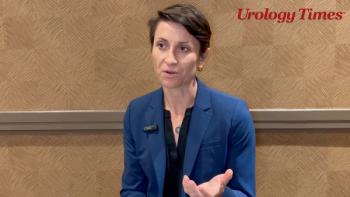
“There was a wonderful breadth of discussion of some of the key questions that exist within management of bladder cancer right now,” says Sarah P. Psutka, MD, MSc.
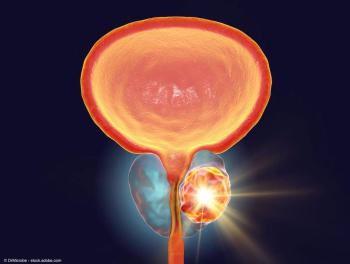
“Our experience with TULSA demonstrates substantial post-procedure decreases in PSA level, PSA density, and prostate volume,” the researchers wrote.

Small index lesions on initial multiparametric MRI were linked to a less aggressive clinical course for patients with prostate cancer on active surveillance.
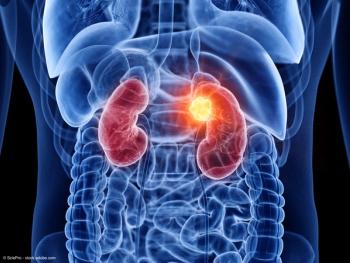
"I think the take-home message is that surgery is safe, even for these challenging surgical cases after this therapy," says Jason Scovell, MD.

The Bladder EpiCheck test received FDA 510(k) clearance in May 2023 for use in patients with NMIBC.
"In the study, when taking into account other factors, such as the socioeconomic factors that are available to us in the NCDB, we find that African American and Hispanic patients are about 20% less likely to receive immune checkpoint inhibition for advanced RCC," says Solomon L. Woldu, MD.
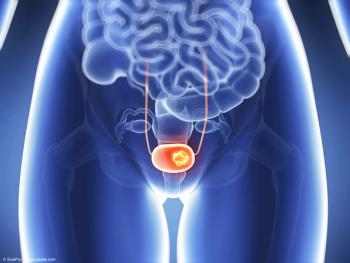
The investigators reported that “the risk of recurrence was significantly lower following BLC (HR=0.67, 95% CI: 0.51-0.89) than WLC.”

At 36 months’ follow-up the gene therapy nadofaragene firadenovec demonstrated durable complete responses in patients with high-risk, BCG-unresponsive non-muscle–invasive bladder cancer.
Primary chemoablative therapy with the mitomycin-containing reverse thermal gel UGN-102 induced complete responses in nearly 4 out of 5 patients with low-grade intermediate-risk non–muscle-invasive bladder cancer.

"One of the biggest surprises was just how ubiquitous prescribing narcotics in all phases were, from intraoperatively to the PACU to postoperatively," says Aaron A. Laviana, MD, MBA.

“The efficacy analysis for all patients based upon a central pathology review revealed a complete response at any time point of 75.7%,” says Mark D. Tyson, MD, MPH.
The oncolytic immunotherapy cretostimogene grenadenorepvec induced complete responses in over three-fourths of patients with high-risk BCG-unresponsive non–muscle-invasive bladder cancer.

The data showed that Black, Hispanic, and uninsured patients were independently associated with a lower likelihood of receiving immunotherapy.