

“For all intents and purposes, how you've been practicing telehealth currently is exactly how you'll be able to practice it until September 30," says Chad Ellimoottil, MD, MS.
“For all intents and purposes, how you've been practicing telehealth currently is exactly how you'll be able to practice it until September 30," says Chad Ellimoottil, MD, MS.

"I hope that these new guidelines and the removal of the black box warning on testosterone therapy will help more physicians feel comfortable providing testosterone therapy to men," says Helen L. Bernie, DO, MPH.
"Radium-223 continues to have a very significant role for patients with advanced castration-resistant prostate cancer," says Rana R. McKay, MD, FASCO.

"When we compared the 2 groups, those that received tamsulosin and those that did not, we did find a significant difference with regard to success rates," says Kate H. Kraft, MD, MHPE, FACS, FAAP. .
“In 5200 men, very clearly, definitively, irrefutably, it has been shown that testosterone therapy is not associated with MACE over the course of the 12 to 24 months after commencement of testosterone therapy," says John P. Mulhall, MD.
“[There’s] a lot going on in bladder cancer in the non–muscle invasive, muscle-invasive space, as well as in some of the biomarkers, which is exciting and will definitely have a huge impact on the management of your patients," says Jason M. Hafron, MD, CMO.

"We found that female patients, Black patients, and patients with non-private insurance had a decreased odds of receiving opioids,” says Hailey Frye.
“A key point is the supply chain is very fragile, and there's not really a good financial incentive to make these drugs," says Ruchika Talwar, MD.

"Personally, I think monitoring and analyzing PSA kinetics is a great one because it's cheap and it's readily available,” says Dr Louise Kostos.
The trial is assessing the safety and tolerability of adaptive radiation therapy with concurrent sacituzumab govitecan in patients with MIBC.

"This certainly does feel like the beginning of the light at the end of the tunnel coming out of the BCG shortage," says Chad A. Reichard, MD.
“Identification of significant predictors [of upstaging] has improved our pre-op counseling," says Neeraja Tillu, MD.

"I think that testosterone is really a medication that can be life changing for so many men, says Helen L. Bernie, DO, MPH.

“The main challenge at the moment is patients are being diagnosed with metastatic disease far earlier than they would have been otherwise, and therefore [are being] considered for combination systemic therapy potentially years earlier than they would have been if we just looked at conventional imaging," says Dr Louise Kostos.
"The relaxation of the restrictions that started during COVID are critically important for continued access," says Mark T. Edney, MD.

"We need to be aware that patients have options for treatment of high-risk biochemical recurrence, and in order to identify that they have high-risk biochemical recurrence...we need to calculate PSA doubling time,” says Alicia Morgans, MD, MPH.
“We might need to do a better job in general about education of the importance of follow-up,” says Christina B. Ching, MD.
"A 14-month delay in disease progression is a very meaningful end point to our patients, because that basically means delay in symptoms, delay in fractures, [and] delay in pain in the castration-resistance setting," says Neeraj Agarwal, MD, FASCO.
"I'm so excited about them finally removing this boxed warning," says Helen L. Bernie, DO, MPH.
“For someone that might be looking at getting into sacral neuromodulation, and has had some reluctance in the past, this does simplify the procedure somewhat," says Colin Goudelocke, MD.

"In terms of how I select patients, I really look at the timing of metastatic disease, so whether it's metachronous or synchronous and the volume, and I think at this stage, the data are most robust for the synchronous and high-volume patients," says Dr Louise Kostos.

“Now, at 1 year, the 1-hour pad test has been done again, as it's part of the protocol, and she suffered 4 g of incontinence on this test, opposed to 125 g at the beginning,” says Emmanuel Chartier-Kastler, MD, PhD.
"I would also like us to be able to reliably use even smaller scopes, but keep them efficient," says Amy E. Krambeck, MD.

“Interestingly, the patients that were more likely to follow-up were those patients that were seen and established within our urology clinic,” says Christina B. Ching, MD.
"It is important for us to ask patients whether they want to intensify or not, and not make assumptions," says Alicia Morgans, MD, MPH.

"[The lack of] a battery makes it ultra small. That's really important," says Colin Goudelocke, MD.

"At 3 months, those patients had a 79% complete response rate, which was durable in 74% at 6 months and 60% at 9 months," says Jacob A. Moyer, BS.

"It was a really interesting paper to develop and write, because over the past decade, there's been such a paradigm shift in the treatment of prostate cancer," says Dr Louise Kostos.
"The primary end point was radiographic progression-free survival, which we reported in 2023, and we updated the radiographic progression-free survival data in 2025," says Neeraj Agarwal, MD, FASCO.
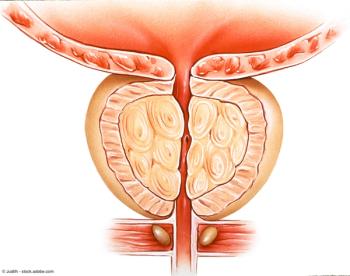
"[Urologists] really need to understand how big the prostate is and how big of a surgery that they're looking at," says Amy E. Krambeck, MD.