

UTv Videos
Advertisement

Advertisement
Matthew D. Galsky, MD, discusses how urologists should approach patient selection for perioperative durvalumab plus chemotherapy based on eligibility criteria for the NIAGARA trial.
The PRELUDE trial is assessing oncological outcomes with neoadjuvant 177Lu-PSMA-617 in high-risk, localized prostate cancer.
Advertisement

The use of onabotulinumtoxinA (onabotA, Botox) for the treatment of overactive bladder comes with several important considerations.

“Like any disease state, you want to make sure you have the right diagnosis; otherwise, you're not going to have a successful treatment plan," says Karyn S. Eilber, MD.

“We have to understand as providers that we're not going to be the one and only conduit for this information anymore, which is a good thing, to be honest," says Ian Metzler, MD, MTM.
The website is meant to educate patients and their caregivers on several aspects of the kidney cancer journey.
Advertisement
“You absolutely need to have a CT scan prior to the surgery to best identify and really intimately understand the kidney’s anatomy," says Perry Xu, MD.

Merrill discusses the evolving non–muscle invasive bladder cancer treatment space.
There is also a need to improve multidisciplinary care, according to Ekene Enemchukwu, MD.

“I think the great thing about Cost Plus Drugs is that, as we mentioned, it's simple, but it's also price transparent," says Raymond Xu, MD.

Enzalutamide plus talazoparib significantly extended overall survival vs enzalutamide alone in mCRPC.
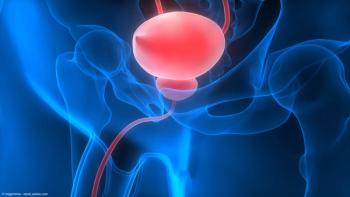
"There really wasn't a difference in in surgical outcomes. The patients tolerated it very well,” says Joshua J. Meeks, MD, PhD.

Ian Metzler, MD, discusses developments in imaging and treating stones.
“Given the rates in epidemiologic studies and surveys showing that up to 70% of women are symptomatic, we were surprised to find that only 9% [filled] a prescription,” says Ekene Enemchukwu, MD, MPH, FACS, URPS.
Sima P. Porten, MD, MPH, discusses the need to better understand how genetic makeup influences how individuals process environmental toxins.
“I think it will help patients decide what prostate surgery they want,” says Naeem Bhojani, MD, FRCSC.

“The benefit of being here at the University of Minnesota is that we have a bunch of different types of settings to be able to trial this," says Hailey Frye.

"What we found is that 9% of women with a GSM-related diagnosis filled a prescription for vaginal estrogen during the study period, and these women tended to be younger," says Ekene Enemchukwu, MD, MPH, FACS, URPS.

“I feel a lot of providers, with Antiva being available, have unfortunately reserved use of this great FDA-approved agent for BCG-unresponsive patients because of the supply issue with BCG," says Suzanne B. Merrill, MD, FACS.
Betty Wang, MD, provides insight on 3 presentations that she believes “may be game changing” in urology.

"We should not be preemptively reducing the dose for all our patients, because half of the patients will never develop grade 3/4 anemia," says Neeraj Agarwal, MD, FASCO.
"We can improve urinary tract infections considerably with behavioral modification," says Anna Myers, CNP.
“The NIAGARA approval really begins to bring immunotherapy into the neoadjuvant setting," says Joshua J. Meeks, MD, PhD.

“I think it's primarily due to dietary changes that are more and more prevalent regardless of sex,” says Ian Metzler, MD, MTM.

“I would say the take-home message for this study is that prescribing tamsulosin for a week prior to an anticipated surgery that involves flexible ureteroscopy is a very simple practice that certainly is within standard of care within pediatric urology," says Kate H. Kraft, MD, MHPE, FACS, FAAP.

“It definitely makes it easier for providers [to counsel patients]," says Landon Trost, MD.
Advertisement
Advertisement
Trending on Urology Times
1
FDA approves sildenafil oral film for men with erectile dysfunction
2
The UroOnc Minute: Adjuvant Therapy in Renal Cell Carcinoma, with Brian Shuch, MD
3
Head-to-head analysis shows OS benefit with apalutamide vs darolutamide in mCSPC
4
Pearls & Perspectives: Modern Semen Testing and Male Fertility Care, with Thomas Masterson, MD
5