

“I love helping people to connect with their passions and to find and create the lives that they wish to create, both within the field of medicine and urology,” says Anne M. Suskind, MD, MS, FACS, FPMRS.
“I love helping people to connect with their passions and to find and create the lives that they wish to create, both within the field of medicine and urology,” says Anne M. Suskind, MD, MS, FACS, FPMRS.
“I think if you were to ask what surprised me, I didn't expect it to have more of an effect on pain than anxiety,” says Heidi J. Rayala, MD, PhD.

"Using the model of 100 implants per year, and assuming that we can reduce teaching visits by 1 during that 90-day global period, that translates into an estimated additional 3000 minutes of outpatient time that you have available to assist other patients," says Bradley Gill, MD.

“There has been a stage migration in part related to the availability of cross-sectional imaging, but there's still a proportion of patients who present with locally advanced disease,” says Harras B. Zaid, MD.
"We're entering an era of more trauma-informed care, and trying to be sensitive to the fact that some of these invasive procedures can be a trigger for people because they're in that moment of feeling helpless and they don't have really a lot of control over the situation," says Heidi J. Rayala, MD.
"If you don't do a repeat curve assessment with each series of injections, you're possibly going to be missing the best location to do the injections," says Landon Trost, MD.

"The genomics assay was using biopsy tissue to help patients make decisions for the treatment choices. We also tested the effect of the assay on provider choice," says Adam B. Murphy, MD, MBA, MSCI.

"There are a lot of questions and issues regarding [topics] like body image and sexual function, and things like that, that also, being a woman in this role, I feel like they feel comfortable asking me those questions," says Bree Duncan, RN, BSN.
"Then [we] also started looking at somatic testing, because if you only stop at germline testing, you miss another 50% of patients who would have somatic alterations who have resistant prostate cancer," says Neal D. Shore, MD, FACS.
"In 2021, we started collecting data on opioids prescribed at discharge to see whether or not patients did or did not get prescribed opioids," says Katherine Wang, MD.
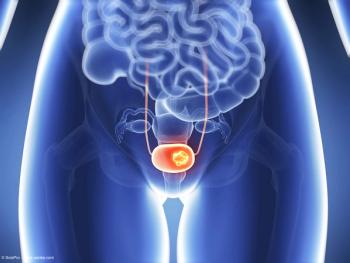
"My goal is to always meet them there in clinic, and then just start that relationship, in a sense of, I'm there for whatever they need," says Bree Duncan, RN, BSN.

“Private equity allows an opportunity to provide improved scale with large organization,” says Scott B. Sellinger, MD, FACS.
“[Although] not yet ready for prime time, ctDNA is being investigated as a very promising non-invasive plasma biomarker of invasive or advanced-stage upper tract urothelial carcinoma,” says Heather L. Huelster, MD.

"The viability and survivability of practices is in jeopardy," says Bradley Gill, MD.
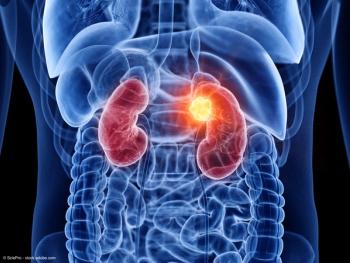
"I think the take-home message is that surgery is safe, even for these challenging surgical cases after this therapy," says Jason Scovell, MD.
"In the study, when taking into account other factors, such as the socioeconomic factors that are available to us in the NCDB, we find that African American and Hispanic patients are about 20% less likely to receive immune checkpoint inhibition for advanced RCC," says Solomon L. Woldu, MD.

"One of the biggest surprises was just how ubiquitous prescribing narcotics in all phases were, from intraoperatively to the PACU to postoperatively," says Aaron A. Laviana, MD, MBA.

“The efficacy analysis for all patients based upon a central pathology review revealed a complete response at any time point of 75.7%,” says Mark D. Tyson, MD, MPH.

"Specifically when we stratified by tertiles, we saw that at 15 years there was a significant difference in cancer-specific survival for those who had a high MMAI score vs lower MMAI scores," says Eric Li, MD.

"All forms of cancer start out by genetic changes in the DNA that cause cancer, so genetic testing becomes very important," says William J. Catalona, MD.
"The Inflation Reduction Act has changed the landscape, and we really still don't understand what those implications are going to be," says Mara R. Holton, MD.

"We need improved efficiency. Part of that is being as optimal in our settings and in our techniques that we can," says Smita De, MD, PhD.
"We knew that the MS or momentary squeeze pump, originally designed at AMS was a fine device, but it did have some issues. We thought we could make it even better," says Ronald A. Morton, MD.

"What we found is that overall, it was relatively effective at providing advice to patients on these pretty commonly encountered questions," says Sharath Reddy, MD.
“Health literacy pushed people towards active surveillance, which I thought was an interesting finding,” says Adam B. Murphy, MD, MBA, MSCI.

"I think there have been a lot of what I would consider incremental improvements over the past few years," Smita De, MD, PhD.

“We have definitely seen significant trends toward transparency in hospital pricing, and in regulations designed to promote that, as well as PBM reform,” says Mara R. Holton, MD.
"In general, I think there's a tremendous amount of variability in terms of how sexual medicine specialists treat patients who have had intimacy issues relating to robotic prostatectomy," says Stanton Honig, MD.

"We as a specialty have to do a better job of educating our colleagues and referring docs," says Roger R. Dmochowski, MD, MMHC, FACS
"This year, we saw a decrease of a couple percent for physician reimbursement to levels that were even lower than pre-COVID times," says Edward Karpman, MD, FACS.