




Prostate Cancer
Latest News
Advertisement
Video Series


Latest Videos



CME Content

Advertisement
More News

The phase 1 trial is assessing VIR-5500 as both a monotherapy and in combination with ARPIs in prostate cancer.
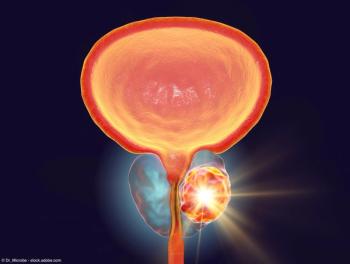
SBRT demonstrated favorable 4-year biochemical recurrence-free survival with a manageable safety profile.

The study is assessing the safety and tolerability of the CaverSTIM device for ED after surgical removal of the prostate.

The PROSTOX ultra test can predict which patients with localized prostate cancer are at a higher risk of GU toxicity from SBRT.
Data showed that adding niraparib to AAP significantly improved radiographic progression-free survival in this patient population.
CAN-2409 plus valacyclovir significantly improved disease-free survival compared with placebo plus valacyclovir.

Here’s a look back at notable news between July and September 2025.

We recap notable headlines from last month in the urologic oncology space.
Melvin L.K. Chua, FRCR, PhD, FASCO, highlights data validating the performance of the ArteraAI Prostate test in an Asian cohort of patients with prostate cancer.
Jason M. Hafron, MD, CMO, reflects on the most impactful recent developments in prostate cancer and offers insight into where the field is headed.

Daniel Spratt, MD, presented data validating the PAM50 gene expression signature as the first predictive biomarker to guide hormone therapy in prostate cancer.

A comprehensive guide to the key regulatory decisions and conferences slated for the last few months of the year.

According to the authors, CAN-2409 may represent the first new treatment option for men with localized prostate cancer in over 2 decades.

Veeru Kasivisvanathan, MBBS, BSc, FRCS, MSc, PGCert, PhD, highlighted how bpMRI aligns with evolving diagnostic strategies.

Mihir S. Shah, MD, outlines ongoing research on treatment intensification prior to radical prostatectomy in patients with localized prostate cancer.
The PREDICT-RT trial is evaluating intensified or de-intensified concurrent hormone therapy and radiation regimens in high-risk prostate cancer.

Timothy Daskivich, MD, MSHPM, noted that guidelines are central to shaping physician behavior and strongly influence clinical practice
The study is designed to evaluate the safety, efficacy, tolerability, and pharmacokinetics of FG-3246 in patients with mCRPC.
Veda Giri, MD, outlines points of consensus and areas of disagreement across national and international guideline recommendations for germline testing in prostate cancer.

A major focus of the discussion is the integration of advanced prostate cancer therapeutics into urology offices.

Ensuring consistent diagnostic quality remains critical.
Stephen J. Freedland, MD, placed dietary guidance within the broader context of survivorship care.
The phase 2 trial has shown encouraging safety and efficacy results for carotuximab and apalutamide in patients with mCRPC.

Veda Giri, MD, highlights her recent review publication on the current state of germline testing in prostate cancer.
The trial enrolled over 700 high-risk participants across 20 clinical trial sites in Taiwan.
Advertisement
Advertisement
Trending on Urology Times
1
The UroOnc Minute: Adjuvant Therapy in Renal Cell Carcinoma, with Brian Shuch, MD
2
FDA approves sildenafil oral film for men with erectile dysfunction
3
Head-to-head analysis shows OS benefit with apalutamide vs darolutamide in mCSPC
4
URO-1 prostate biopsy devices adopted across Novant Health System as clinical study continues
5