



Prostate Cancer
Latest News
Advertisement
Latest Videos


CME Content


Advertisement
More News

Three codes are available for prostate biopsy, but only one is typically used for perineal biopsy, according to Jonathan Rubenstein, MD, and Mark Painter.

In this video, Eric Klein, MD, discusses a study evaluating the 17-gene Oncotype DX Genomic Prostate Score assay in African American and Caucasian American men.

The classifier can be a useful adjunct for clinical decision-making, an investigator says.

This final analysis of the phase 3 PROSPER study supports enzalutamide and androgen deprivation therapy as the standard of care to improve overall survival in prostate cancer patients before the onset of detectable metastasis.

Apalutamide (ERLEADA) combined with androgen deprivation therapy improves overall survival more than androgen deprivation therapy alone in men with non-metastatic castration-resistant prostate cancer at high risk of metastases, according to results from investigators’ final analysis of the phase 3 SPARTAN trial.

The breadth of applications will widen as the number of new platforms grows, according Joshua Calvert, MD, MPH.

The FDA has approved 2 poly (ADP-ribose) polymerase (PARP) inhibitors for men with metastatic castration-resistant prostate cancer who have certain genetic mutations, marking the first approvals of this newer drug class in prostate cancer.

With additional follow-up of approximately 10 months, monotherapy with the PD-1 inhibitor pembrolizumab (Keytruda) continued to show antitumor activity in men with metastatic castration-resistant prostate cancer. However, monotherapy alone is likely not a sufficient treatment in this patient population, according to Emmanuel Antonarakis, MBBCh, professor of oncology at Johns Hopkins University in Baltimore, Maryland.

Findings from a systematic literature review further our understanding of the prevalence of distinct clinical states of advanced prostate cancer, their association with homologous recombination repair (HRR) gene alterations, and the use of testing methods to identify HRR gene alterations, researchers say.

In a recent study, researchers examined real-world outcomes for patients with metastatic castration-resistant prostate cancer treated with radium-223 (Xofigo). Study author Rana R. McKay, MD, of UC San Diego Health, discusses this study and its significance in the castration-resistant prostate cancer landscape.

After meeting the primary endpoint in a phase 3 study, Myovant Sciences submitted a New Drug Application to the FDA seeking approval of relugolix, an oral nonpeptide gonadotropin-releasing hormone receptor antagonist, as a once-daily treatment for men with advanced prostate cancer.

“The outcomes and experience in the PROfound trial… represent major progress in the treatment of advanced prostate cancer that historically has not been considered amenable to genomic mutation-targeted therapy,” says Maha Hussain, MD.

Advances in genomic testing will help determine lines of therapy in men with mCSPC and mCRPC, according to Raoul S. Concepcion, MD.

Christina Yi, chief operations officer at Dendreon, discussed the efforts being made by the biotech company and its employees to meet the needs of patients with advanced prostate cancer who have chosen treatment with sipuleucel-T (Provenge).
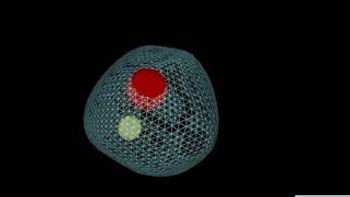
Abreu’s group at USC provides an overview of the transperineal MRI/TRUS fusion prostate biopsy also utilizing the freehand technique.
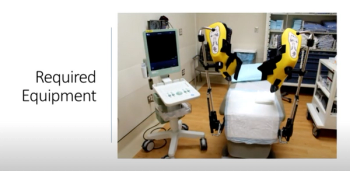
George and colleagues demonstrate the use of the Michigan Urological Surgery Improvement Collaborative (MUSIC) template to perform a freehand transperineal prostate biopsy using the PrecisionPoint Transperineal Access System.
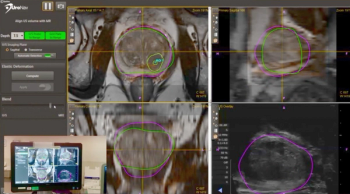
Pinto and colleagues provide an overview of MRI/TRUS fusion-guided transperineal biopsy utilizing the UroNav platform.

Results from 2 years of follow-up in men undergoing proton beam therapy for localized prostate cancer suggest that treatment with the rectal hydrogel spacer (SpaceOAR) provides better rectal sparing than rectal balloon immobilization.

In this interview, Leonard G. Gomella, MD, discusses the increasingly important role genetic testing plays in prostate cancer, current obstacles to testing, and when and how it will be carried out.

"Death due to prostate cancer was quite rare, with only four men (0.2%) dying of prostate cancer during the study period," writes Badar M. Mian, MD.
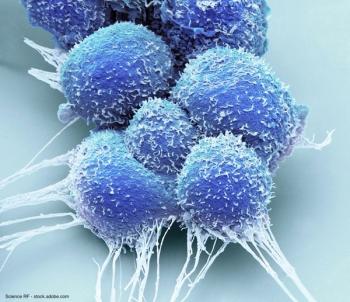
Stereotactic body radiation reduced the likelihood for future PSA rises and significantly prolonged survival in men with oligometastatic prostate cancer (≤3 metastases), according to recently published findings from ORIOLE, a phase II, multicenter, randomized, observation-controlled trial.
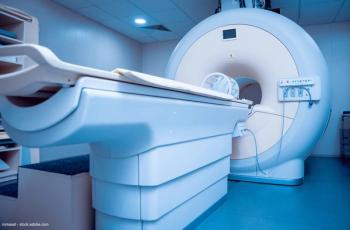
“It hasn’t become the gold standard yet. There are still a lot of inter-reader reliability issues. The same MRI scans, read by different radiologists, may be read differently," says one urologist.

Nanospectra Biosciences, Inc. recently announced the start of a pivotal study to determine the efficacy of using magnetic resonance imaging/ultrasound fusion imaging technology to direct focal ablation of prostate tissue using nanoparticle-directed laser ablation.

Recent research shows contemporary imaging and biopsy techniques often fail to identify contralateral tumors in men presumed to have unilateral prostate cancer-and the results have significant implications for identifying candidates for hemiablation.

In this video, Scott Eggener, MD, outlines which patients are the best candidates for focal therapy for prostate cancer, and discusses the differences in follow-up for patients treated with focal therapy compared with those undergoing active surveillance.
Advertisement
Advertisement
Trending on Urology Times
1
FDA approves sildenafil oral film for men with erectile dysfunction
2
Integration of doublet and triplet therapy in metastatic prostate cancer
3
The UroOnc Minute: Adjuvant Therapy in Renal Cell Carcinoma, with Brian Shuch, MD
4
URO-1 prostate biopsy devices adopted across Novant Health System as clinical study continues
5